
Many adults begin noticing subtle changes in their mental sharpness after 40. It may take longer to recall a name. Multitasking may feel more mentally draining than it once did. Focus may slip more easily during a busy day. Mental fatigue may show up sooner, especially when stress is high or sleep is poor. These changes can feel frustrating, and for some people, they create real concern about long-term memory and cognitive health.
The good news is that brain health after 40 is not only about decline. It is also about support. The brain responds to daily habits, physical health, sleep quality, stress levels, nourishment, and mental engagement more than many people realize. Staying mentally sharp is not usually the result of one supplement, one food, or one brain-training trick. It is more often the result of a lifestyle that supports clarity, focus, energy, and resilience over time.
Brain health and memory matter because they affect nearly every part of life. Focus helps people work, communicate, and make decisions. Memory supports independence, relationships, and confidence. Mental clarity affects how people feel emotionally and physically. When the brain feels overloaded, foggy, or tired, daily life often becomes harder.
A supportive routine can help protect cognitive function as the years go on. It can improve concentration, reduce mental fatigue, support mood, and help adults feel more confident in their thinking. This guide explains what brain health really means after 40, why mental sharpness can change, what daily habits matter most, and how to build a lifestyle that supports long-term cognitive health.
What Brain Health Really Means
Brain health is not limited to memory alone. It includes focus, concentration, mood, mental energy, emotional balance, learning, decision-making, and the ability to think clearly throughout the day. Many people only think about brain health when they worry about forgetfulness, but cognitive well-being is much broader than that.
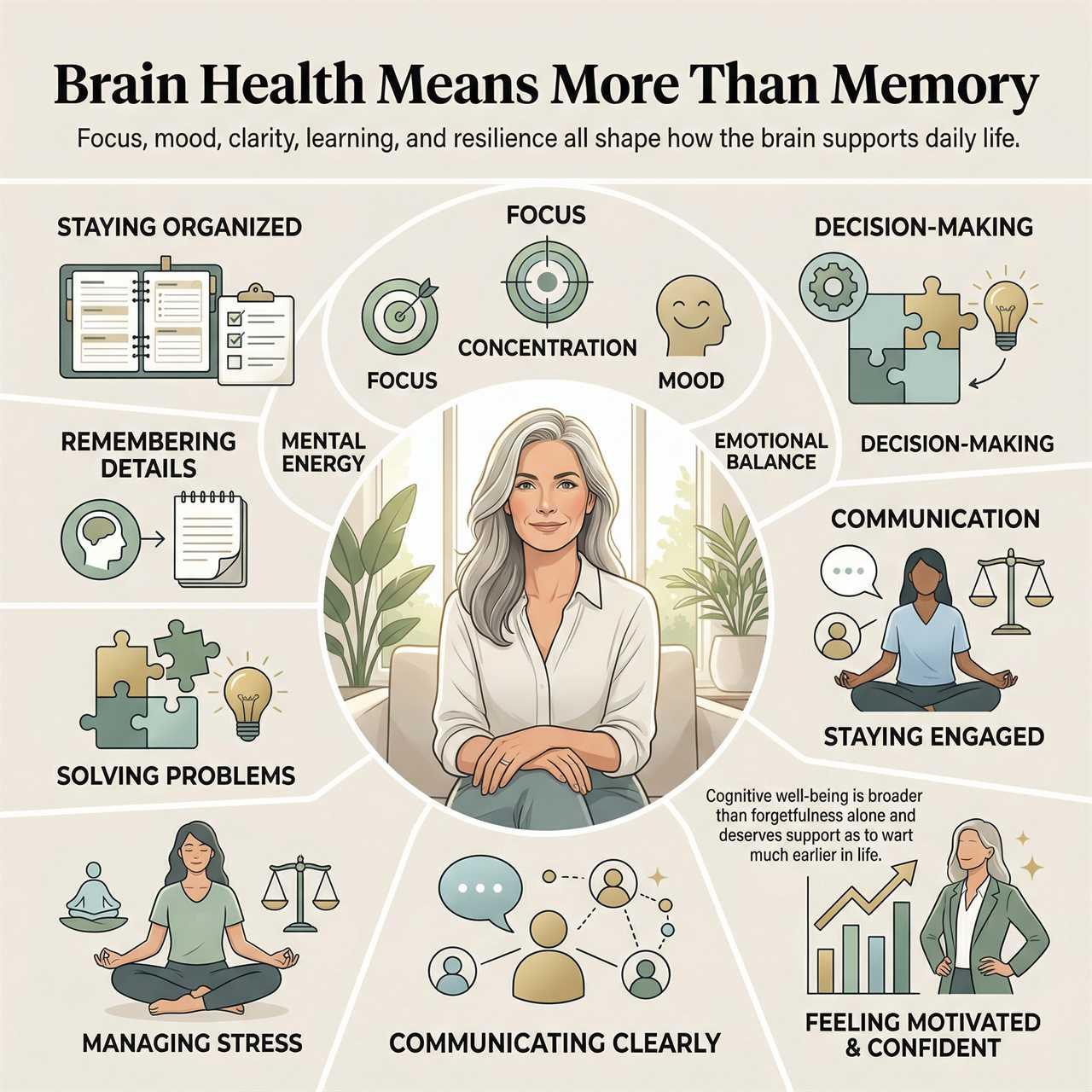
A healthy brain supports everyday life in practical ways. It helps you stay organized, remember details, solve problems, manage stress, communicate clearly, and stay engaged in the world around you. It also affects motivation, confidence, and emotional resilience. This is why brain health is not something to think about only later in life. It deserves support much earlier.
Why Mental Sharpness Can Change After 40
Changes in mental sharpness after 40 are often influenced by several overlapping factors. Sleep is one of the biggest. Poor sleep can affect concentration, memory, mood, and mental speed. Chronic stress can also make thinking feel scattered and make memory feel less reliable. When the brain is overloaded, it becomes harder to focus and recall information.
Nutrition also matters. Blood sugar swings, dehydration, low protein intake, or a diet low in nutrient-dense foods can affect mental energy and clarity. Physical inactivity can contribute as well. The brain benefits from blood flow, movement, and routines that support the body overall.
Hormonal changes, busy schedules, emotional strain, and digital overload can also make mental sharpness feel less steady than before. That does not automatically mean something is seriously wrong. Often, it means the brain needs better support in daily life.
For a closer look at these patterns, read why mental sharpness changes with age.
The Foundations of Brain Health After 40
Sleep
Sleep is one of the strongest pillars of cognitive health. During sleep, the brain gets a chance to recover, organize information, and function more effectively the next day. Poor sleep can quickly affect memory, concentration, patience, and emotional balance.
Nutrition
The brain needs steady nourishment. Meals that include protein, healthy fats, fiber, fruits, vegetables, and hydration often support better mental energy than eating patterns built around processed foods and sugar spikes. Nutrition influences not only physical health but also how alert or foggy the brain feels.

For practical food guidance, read foods that help support focus and memory.
Movement
Physical activity supports brain health by improving circulation, reducing stress, and supporting overall well-being. Exercise does not only help the body. It often helps the brain feel clearer and more awake. Even walking can make a noticeable difference.
Stress Management
Chronic stress can make people feel mentally scattered, forgetful, and emotionally worn down. Stress management is not a luxury. It is part of supporting memory, clarity, and mental stamina.
Mental Engagement
The brain benefits from use. Learning, reading, problem-solving, social interaction, hobbies, conversation, and curiosity all help keep the mind active. Mental engagement does not have to be formal to be useful. What matters is continuing to challenge and involve the brain in meaningful ways.
Daily Habits That Matter Most
One of the best ways to support brain health after 40 is through simple, repeatable daily habits. Staying hydrated, sleeping more consistently, moving the body, eating balanced meals, taking breaks from screen overload, and finding small ways to reduce stress can all help support mental clarity.
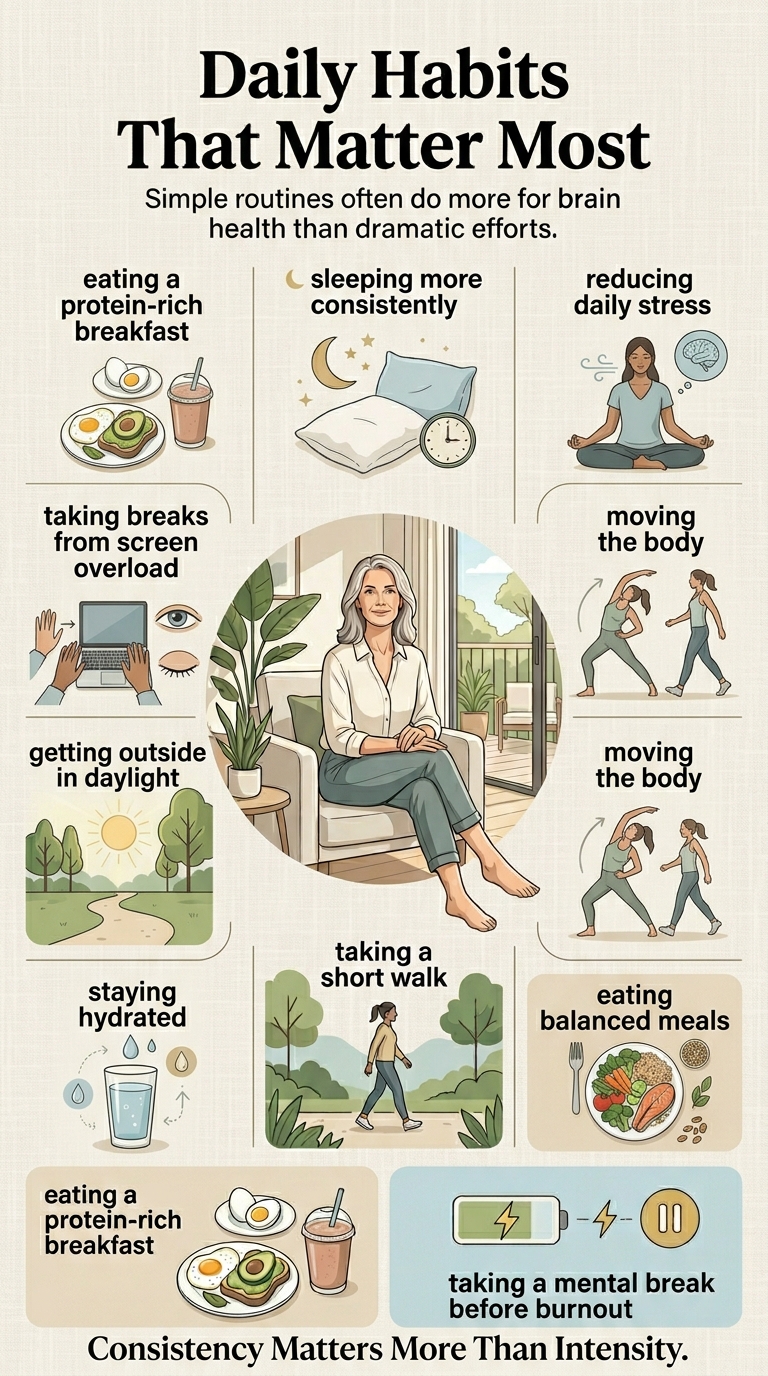
Small habits often matter more than dramatic efforts because they happen more often. A short walk. A protein-rich breakfast. Going to bed earlier. Getting outside in daylight. Taking a mental break before burnout hits. These habits may look simple, but they create the conditions the brain often needs to function better.
For a more focused breakdown, read daily habits that support brain health naturally.
Foods and Nutrients That Support the Brain
Brain-supportive nutrition does not need to be complicated. It often includes protein-rich meals, fiber-rich carbohydrates, hydration, healthy fats, fruits, vegetables, nuts, seeds, and foods that support steadier energy. The goal is not to eat perfectly. It is to create a way of eating that supports concentration, mood, and daily mental function.
Many adults find that eating more balanced meals improves focus simply because it reduces the energy crashes and mental fog that come with poor meal quality. Water matters too. Mild dehydration can affect concentration faster than many people realize.
Long-Term Cognitive Health Is Built Through Lifestyle
Brain health is not built in one meal or one workout. It is built through a pattern of living. The brain tends to respond well when sleep, movement, food quality, mental engagement, and stress management all work together. That is why it helps to think in terms of lifestyle rather than one quick fix.
For practical habits that support the bigger picture, read best lifestyle habits for long-term cognitive health.
When Brain Fog Feels Worse Than Normal
Occasional forgetfulness and distraction are common, especially during stressful or busy periods. But persistent brain fog, unusual memory issues, extreme mental fatigue, or noticeable changes in thinking should not always be brushed aside. Sometimes the issue is sleep, stress, overload, nutrition, or inactivity. Sometimes it may deserve a closer look.
Paying attention early is a practical part of brain health. The earlier you notice a pattern, the easier it is to respond with better support.
A Simple Brain Health Routine After 40
A basic brain-supportive routine might include sleeping on a more regular schedule, eating more balanced meals, drinking more water, walking daily, getting daylight, limiting mental overload where possible, and making time for reading, conversation, or another mentally engaging activity.

This kind of routine may seem simple, but that is exactly why it can work. The brain often responds best when support is steady instead of extreme.
Final Thoughts
Brain health after 40 is not only about preventing decline. It is about making choices that help you think more clearly, feel more focused, and stay mentally engaged as the years go on. Sleep, movement, nutrition, stress management, and mental activity all work together to support long-term cognitive health.
You do not need to wait for serious problems before supporting your brain. You can begin with daily habits that reduce mental fatigue and improve clarity right now. Over time, those choices can help protect memory, focus, confidence, and overall quality of life.
The goal is not perfect performance. It is better support for the brain you rely on every day.
FAQ
What does brain health after 40 mean?
Brain health after 40 means supporting focus, memory, mental energy, mood, and cognitive function through sleep, nutrition, movement, stress management, and daily habits.
Why does mental sharpness change after 40?
Mental sharpness can change because of poor sleep, chronic stress, nutrition habits, dehydration, inactivity, hormonal shifts, and mental overload.
What are the best daily habits for brain health?
Some of the best habits include sleeping consistently, staying hydrated, eating balanced meals, walking daily, managing stress, and staying mentally engaged.
Can adults over 40 improve focus and memory naturally?
Yes. Many adults can support better focus and memory naturally by improving sleep, food quality, hydration, movement, and daily lifestyle habits.