
Carbohydrates often get blamed for weight gain, fatigue, blood sugar swings, and poor health. But the truth is more useful than simply saying, “carbs are bad.” Not all carbohydrates act the same way in the body. Some raise blood sugar quickly. Others digest more slowly, provide fiber, and support steadier energy.
That is why understanding the glycemic index matters. The glycemic index ranks carbohydrate-containing foods based on how much they raise blood sugar. Low-glycemic foods have a smaller effect, while high-glycemic foods tend to raise blood sugar faster and higher.
Why Carb Quality Matters
A slice of white bread, a bowl of beans, a candy bar, and an apple all contain carbohydrates. But they do not behave the same way after digestion. Highly refined carbohydrates are usually broken down quickly. This can lead to a fast rise in blood glucose, followed by a crash that may leave a person hungry, tired, or craving more sugar.
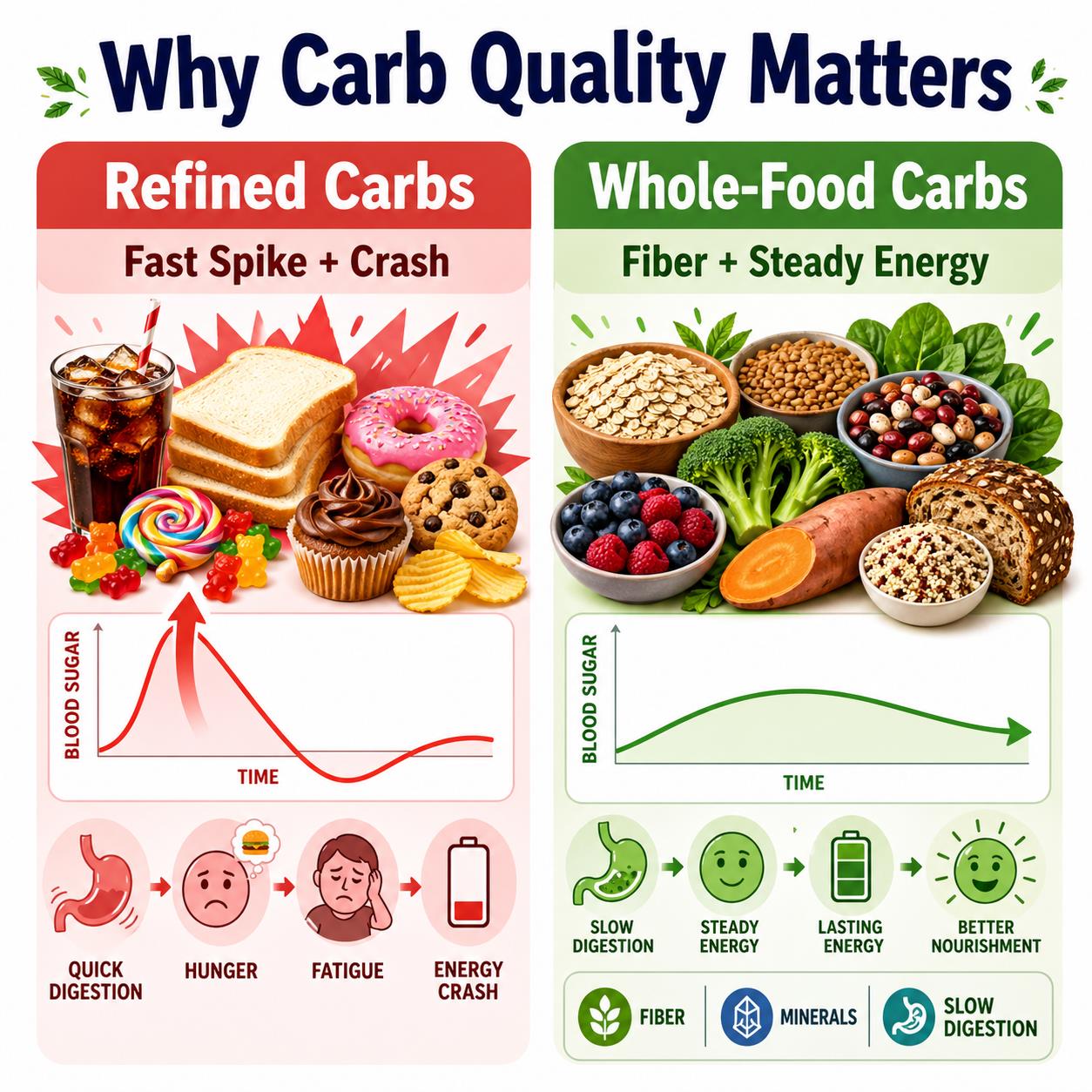
Whole-food carbohydrates are different. Foods like vegetables, lentils, beans, berries, oats, and true whole grains often come with fiber, minerals, and plant compounds. Fiber slows digestion and helps the body handle glucose more gradually. The American Diabetes Association explains that carbohydrates come in different forms, including starches, sugars, and fiber, and all three matter when looking at food choices.
The Problem With “Good” and “Bad” Labels
Calling all carbs “bad” creates confusion. It can make people avoid fruit, beans, or whole grains while missing the real issue: refined, low-fiber, high-sugar foods eaten too often.
A better question is not, “Does this food have carbs?” A better question is, “What kind of carbs does this food contain, and how will it affect my energy, hunger, and blood sugar?”
For example, low-glycemic foods are generally rated 55 or less, medium-glycemic foods are 56 to 69, and high-glycemic foods are 70 or above. But the number is only one tool. Portion size still matters. So does the full meal. Protein, healthy fat, and fiber can all change how the body responds.
Glycemic Load Gives More Context
The glycemic index looks at how fast a food can raise blood sugar. Glycemic load goes a step further by considering how much carbohydrate is actually in a normal serving. This matters because a food may have a higher glycemic index but still have a modest effect if the serving contains fewer total carbs.
That is why real-life eating should not be reduced to one chart. Harvard Health notes that the total amount of carbohydrate in a food can be a stronger predictor of blood sugar response than glycemic index alone.
A Smarter Way to Eat Carbs
The goal is not to fear carbohydrates. The goal is to choose them wisely.
Start with whole foods. Choose vegetables, legumes, nuts, seeds, berries, and whole grains more often than refined flour, sugary drinks, pastries, and processed snacks. Pair carbs with protein or healthy fats. Watch portions. Notice how your body feels after meals.
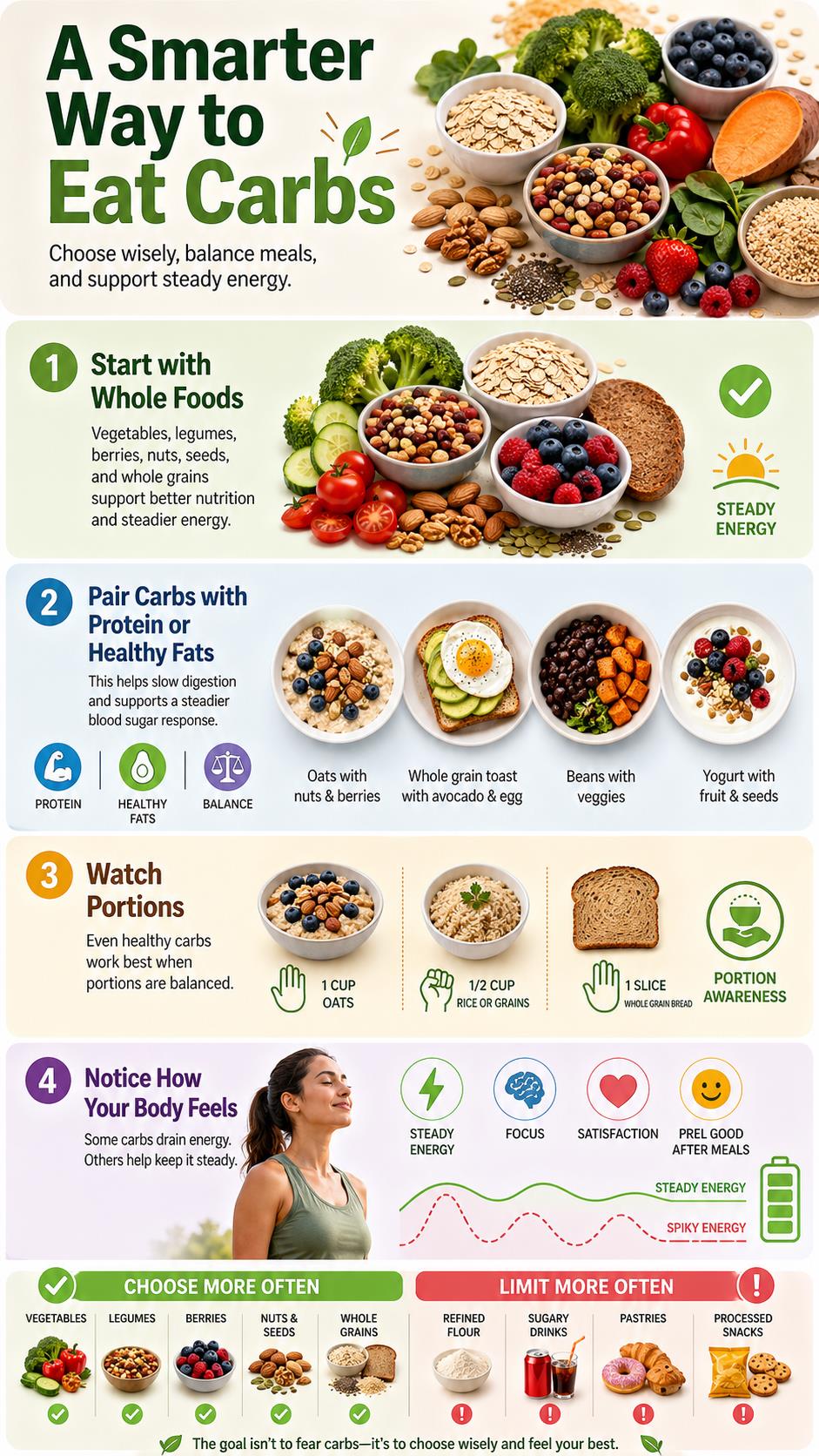
Carbohydrates are not all the same. Some drain energy. Some support it. Some spike blood sugar. Others help keep it steady. When people understand the difference, they can stop chasing diet trends and start making better daily choices.

Frequently Asked Questions
1. Are all carbs bad for blood sugar?
No. Reddit users often ask this because sugar, bread, rice, oats, beans, and fruit all contain carbs. The better question is carb quality. Whole-food carbs with fiber usually digest slower, while refined carbs can raise blood sugar faster.
2. What matters more: glycemic index or total carbs?
Both matter, but total carbohydrate amount often has a bigger real-world effect. Glycemic index shows how fast a food raises blood sugar, while glycemic load considers both speed and portion size. That makes glycemic load more practical for meals.
3. How can you eat carbs without a big blood sugar spike?
Choose high-fiber carbs, keep portions reasonable, and pair carbs with protein or healthy fats. Reddit discussions also mention walking after meals, which can help muscles use glucose. Whole oats, beans, vegetables, and berries are better choices than sugary drinks or refined snacks.