
Understanding Yeast and Fungal Overgrowth
Fungal infections are a common problem for many people, and they are often connected to the way modern diets affect the body. Yeast is naturally present in the body in changing amounts. It is not always a problem by itself. The issue begins when yeast grows out of balance and becomes an overgrowth problem.
This overgrowth is not simply a random infection. It can be understood as the body’s reaction to a deeper imbalance in the internal environment. When the body’s cellular terrain is not healthy, yeast can grow more easily. That is why getting rid of yeast and fungus is not just about attacking the yeast. It is about correcting the conditions that allow it to thrive.
Common Symptoms of Yeast and Fungus
Yeast and fungal overgrowth can show up in different ways. Some people may feel exhausted even when they are trying to rest. Others may notice strong cravings for sweets, bad breath, or a white coating on the tongue.
There may also be symptoms that affect thinking and mood, such as brain fog or hormone imbalance. Joint pain, loss of sex drive, chronic sinus problems, allergy issues, gas, bloating, and vaginal infections may also be connected to fungal imbalance.
Because these symptoms can appear in many different areas of the body, fungal overgrowth is sometimes overlooked. A person may try to treat one symptom at a time without realizing that the larger issue may be connected to yeast, digestion, and internal imbalance.
What Causes Yeast to Grow?
Several factors may contribute to yeast and fungus becoming a bigger problem. The transcript identifies antibiotics, oral contraceptives, corticosteroids, and chemotherapy as possible causes.
These influences may disturb the body’s natural microbial balance. When that balance changes, yeast may have more opportunity to grow. The body normally contains yeast in small, changing amounts, but certain conditions may allow it to multiply beyond what is healthy.
Diet also plays an important role. Yeast grows in the presence of excess sugar. A diet high in sugar can help create the kind of environment where yeast becomes harder to control.
Why Sugar Matters
One of the most important steps in getting rid of yeast and fungus is reducing excess sugar. Yeast grows when sugar is present in high amounts. This means that sweet foods, sugary drinks, and a diet built around refined carbohydrates may make the problem worse.
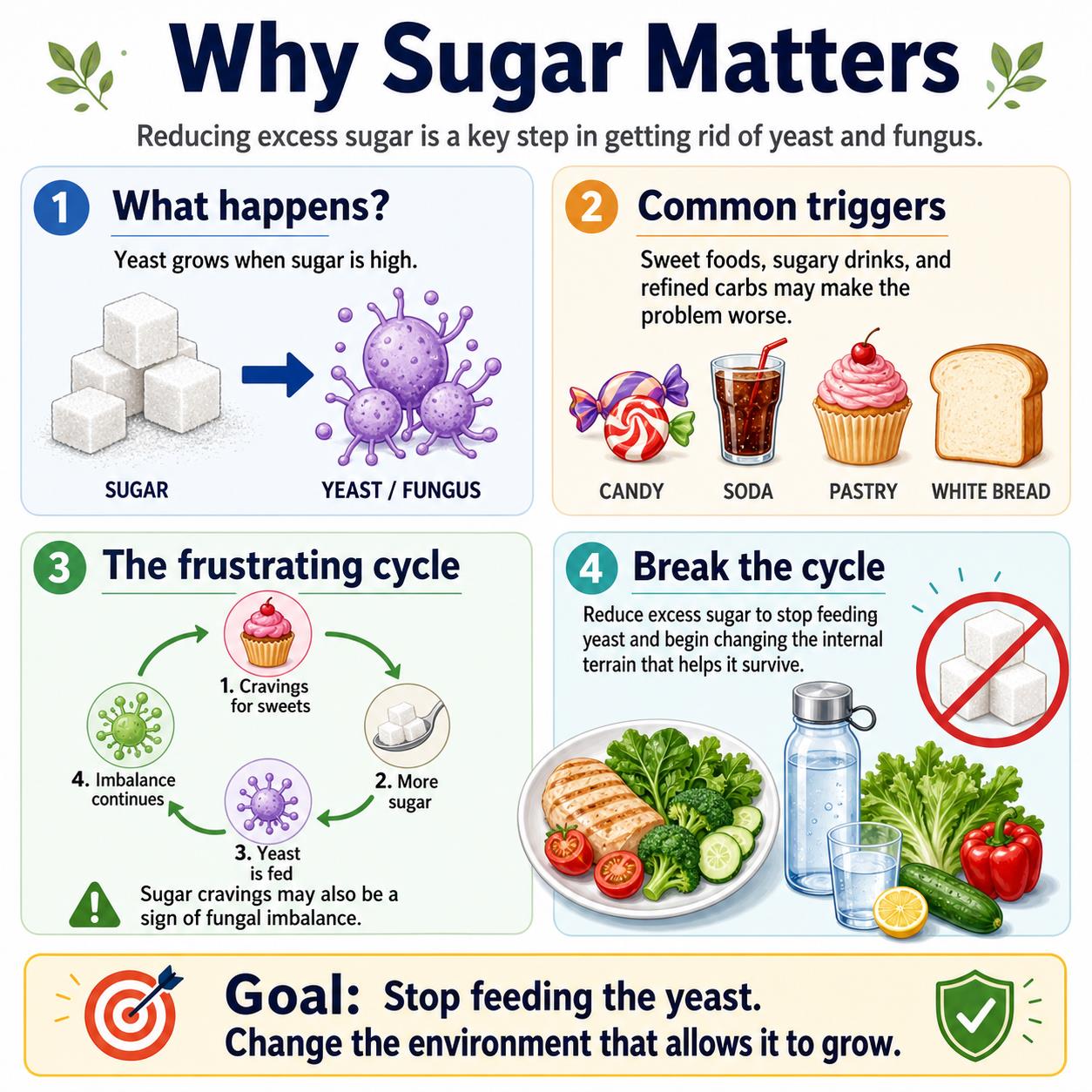
Cravings for sweets may also be one of the signs of fungal imbalance. This can create a frustrating cycle. The body craves sugar, sugar feeds yeast, and yeast continues to grow.
Breaking this cycle may require a serious change in diet. The goal is to stop feeding the yeast and begin changing the internal terrain that allows it to survive.
The Role of Oxygen and Cellular Terrain
According to the transcript, yeast grows in the absence of oxygen. This means the body’s internal environment matters. When oxygenated fluids are not flowing freely, yeast may be more likely to thrive.
The transcript describes yeast overgrowth as a cellular terrain problem. In simple terms, the body’s internal environment must be corrected. When the terrain is unhealthy, yeast can grow. When the terrain improves, the body becomes less supportive of fungal overgrowth.

This is why the solution should focus on restoring balance, improving digestion, and removing anything that blocks the free flow of oxygenated fluids.
Correcting Digestive Imbalance
The transcript states that when digestive imbalance is corrected, the candida problem will go away. This makes digestion a central part of addressing yeast and fungus.
A person should not only think about what they are removing from the diet, but also what they are doing to support healthy digestion. The digestive system is closely connected to microbial balance. When digestion is not working properly, yeast may become more difficult to control.
Restoring balance may involve eating in a way that fits the person’s metabolic type. The transcript emphasizes the need to eat right for one’s metabolic type rather than follow the same diet for everyone.
Removing Toxins
Another important step is removing toxins that block the free flow of oxygenated fluids. When the body is burdened by toxins, its internal balance may be affected. This can make it harder to correct yeast and fungal overgrowth.
The focus should be on helping the body return to a healthier state. Yeast overgrowth is not only about the organism itself. It is also about the environment that allows it to grow.
By reducing sugar, improving digestion, and supporting the body’s natural flow of oxygenated fluids, the internal terrain may become less favorable to yeast.
Natural Support for Microbial Balance
The transcript also mentions herbal tinctures, essential oils, and probiotics as tools that can help restore microbial balance. These supports may help the body rebuild a healthier internal environment.
Probiotics may support the balance of helpful microbes. Herbal tinctures and essential oils may also be used as part of a broader plan to support microbial balance.
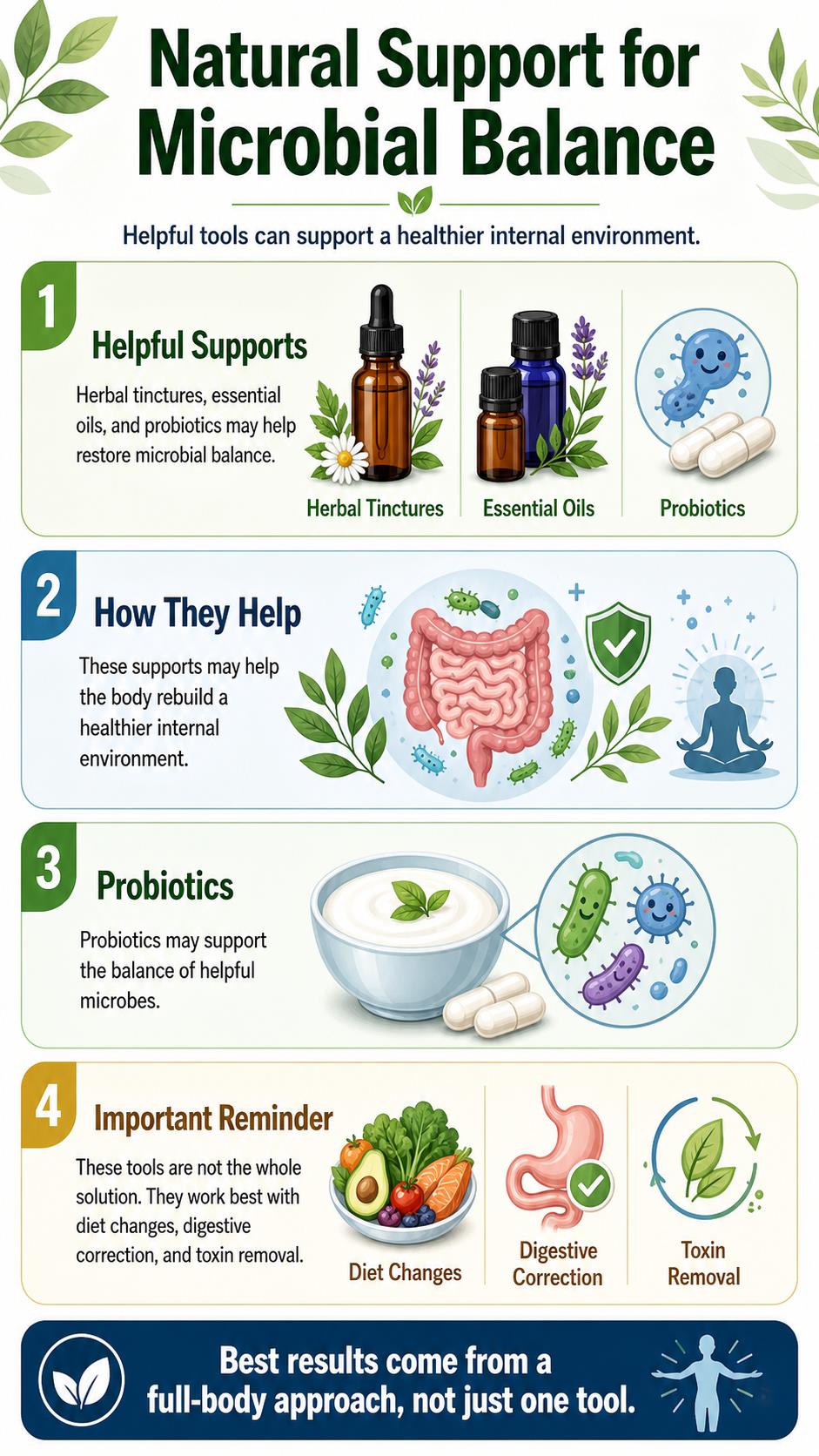
However, these tools should not be viewed as the whole solution. They work best when combined with diet changes, digestive correction, and toxin removal.
A Better Way to Get Rid of Yeast and Fungus
Getting rid of yeast and fungus requires more than a quick fix. The main goal is to stop creating the conditions that allow yeast to grow.
That means reducing excess sugar, correcting digestive imbalance, eating according to metabolic type, supporting oxygen flow in the body, removing toxins, and using natural supports such as herbal tinctures, essential oils, and probiotics when appropriate.
Yeast is naturally present in the body, but overgrowth signals that something deeper needs attention. When the internal terrain improves, the body becomes better able to restore microbial balance. That is the key to getting rid of yeast and fungus in a more complete and lasting way.

Frequently Asked Questions

What Wellness Really Means After 40
Many adults hear the word wellness and immediately think of diet plans, vitamins, gym routines, or self-improvement trends. But wellness after 40 is usually much more practical than that.
Read Article →
Simple Self-Care Habits for Older Adults
Self-care is often misunderstood. Many people think it has to be expensive, time-consuming, or indulgent to count.
Read Article →
How to Improve Your Daily Quality of Life Naturally
Quality of life is one of those phrases people use often, but it becomes much more meaningful after 40. At this stage, many adults are not only asking how to stay healthy.
Read Article →
Best Wellness Routines for Busy Adults Over 40
Many adults over 40 know wellness matters, but they often feel as though they do not have time for it. Between work, family, responsibilities, errands, caregiving, and mental load, the idea of adding a perfect wellness routine can feel unrealistic.
Read Article →