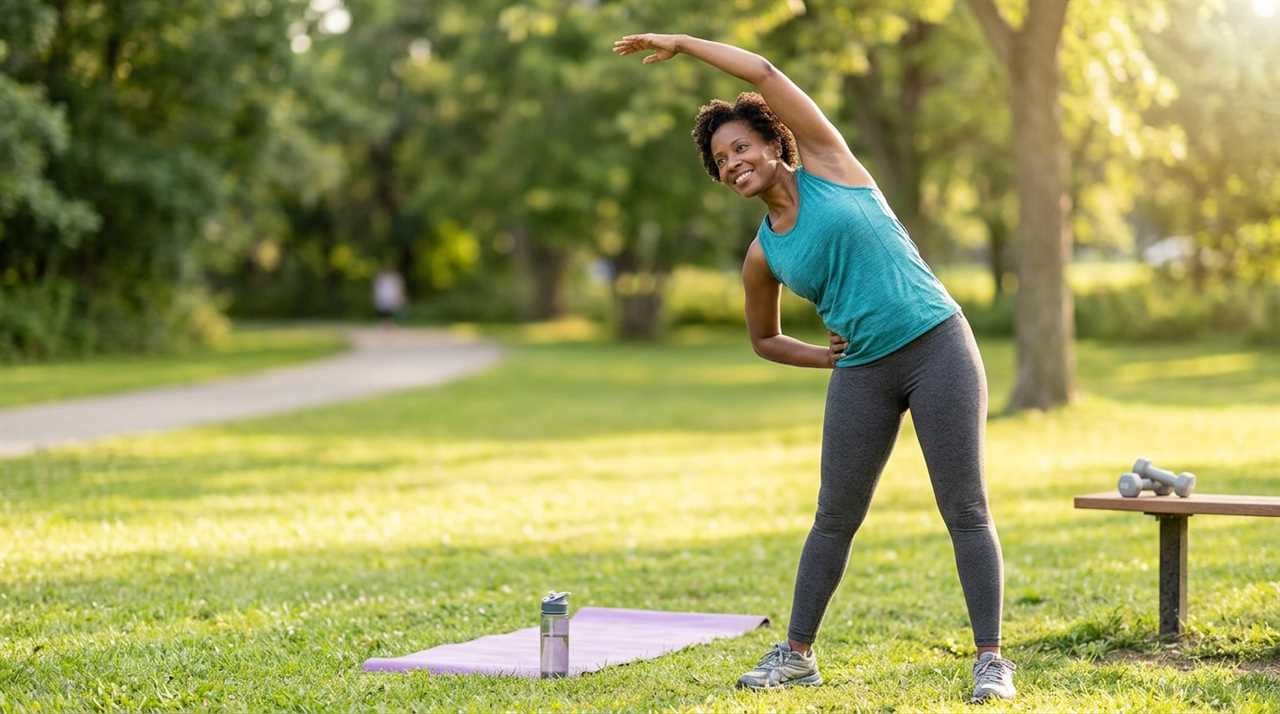
Starting or restarting fitness after 40 can feel different than it did in earlier years. The body may not recover as quickly. Joints may feel stiffer. Energy can vary from one day to the next. A workout that once felt easy may now leave you sore for longer than expected. These changes can make exercise feel more intimidating, especially for adults who have been inactive for a while or who are trying to rebuild healthy habits after years of putting other priorities first.
The good news is that fitness after 40 is not about chasing the same routine you had at 20. It is about building strength, mobility, endurance, balance, and energy in a way that supports your current life and protects your long-term health. Fitness over 40 is not only about appearance or weight. It is about preserving independence, reducing stiffness, supporting joint health, protecting muscle, and helping the body stay capable in everyday life.
A well-designed fitness routine can improve mood, sleep, posture, circulation, confidence, and overall resilience. It can also make daily tasks easier, from climbing stairs and carrying groceries to getting up from a chair or staying active with family. The body responds well to movement at every age, and adults over 40 can make meaningful progress with the right approach.
This guide explains what fitness over 40 really means, why it matters, how to begin safely, what types of exercise matter most, and how to create a routine that is sustainable instead of overwhelming.
Why Fitness Matters More After 40
As adults get older, fitness becomes more important because the body tends to lose muscle, mobility, and resilience when movement decreases. Sitting too much, skipping strength work, and avoiding exercise can lead to weakness, stiffness, reduced balance, and lower energy. These effects often build gradually, which makes them easy to ignore until daily life starts feeling harder.
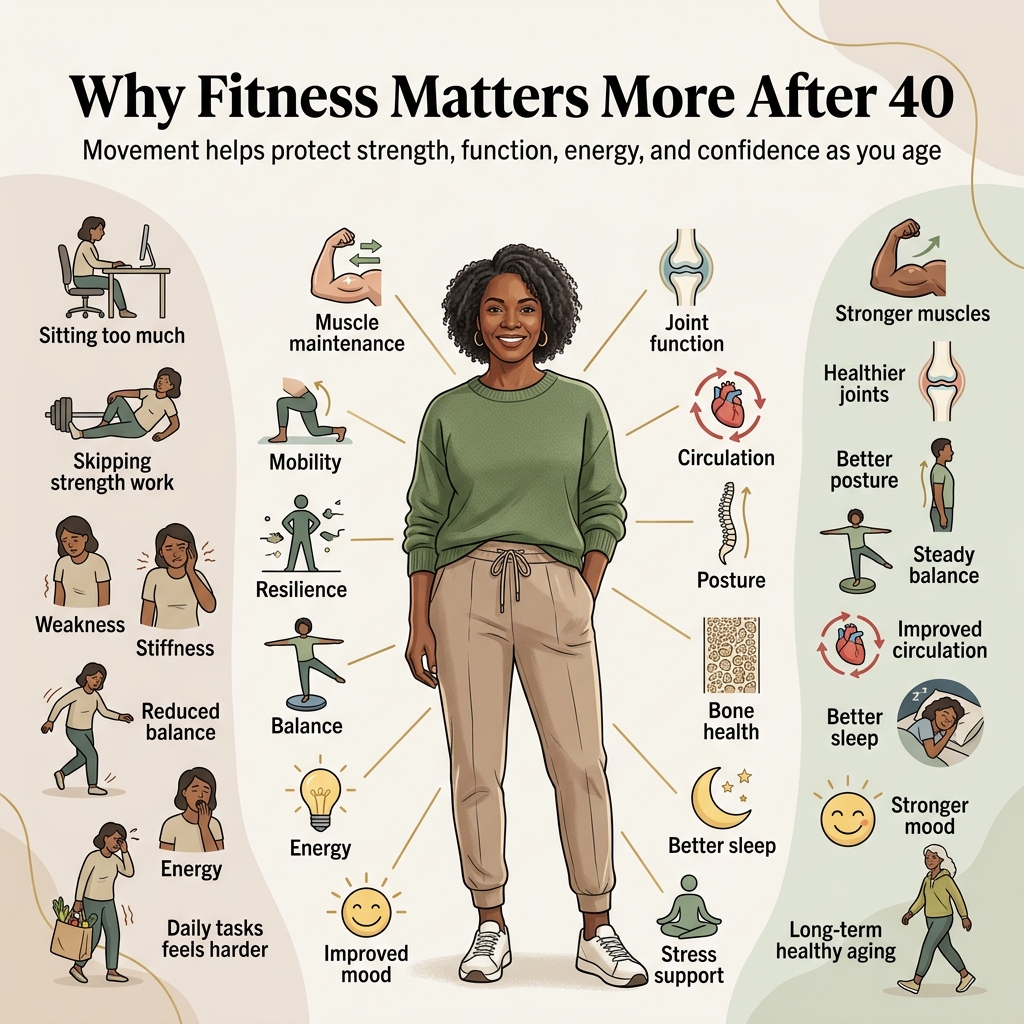
Regular exercise helps counter those patterns. It supports muscle maintenance, joint function, circulation, posture, bone health, and energy. It can also help adults feel more steady, more capable, and more confident in their own bodies. After 40, exercise is less about extremes and more about preserving function.
Fitness also supports healthy aging in broader ways. It helps reduce the physical effects of stress, supports better sleep, improves mood, and contributes to better long-term health habits overall. Once movement becomes part of daily life again, it often improves other areas too.
What Fitness Over 40 Should Focus On
A strong fitness routine after 40 usually includes more than one type of exercise. Instead of putting all the focus on weight loss or cardio, it helps to think in terms of physical function.
Strength
Strength training is one of the most important forms of exercise after 40 because it helps preserve muscle, support metabolism, improve posture, protect joints, and make daily tasks easier. Many adults lose muscle over time when they do not use it. Strength work helps slow that decline and often improves confidence along with it.
Mobility
Mobility helps the body move comfortably and efficiently. Without enough movement, the hips, back, shoulders, and other areas can become stiff. Mobility work, stretching, and regular daily movement help keep the body more functional.
Cardio
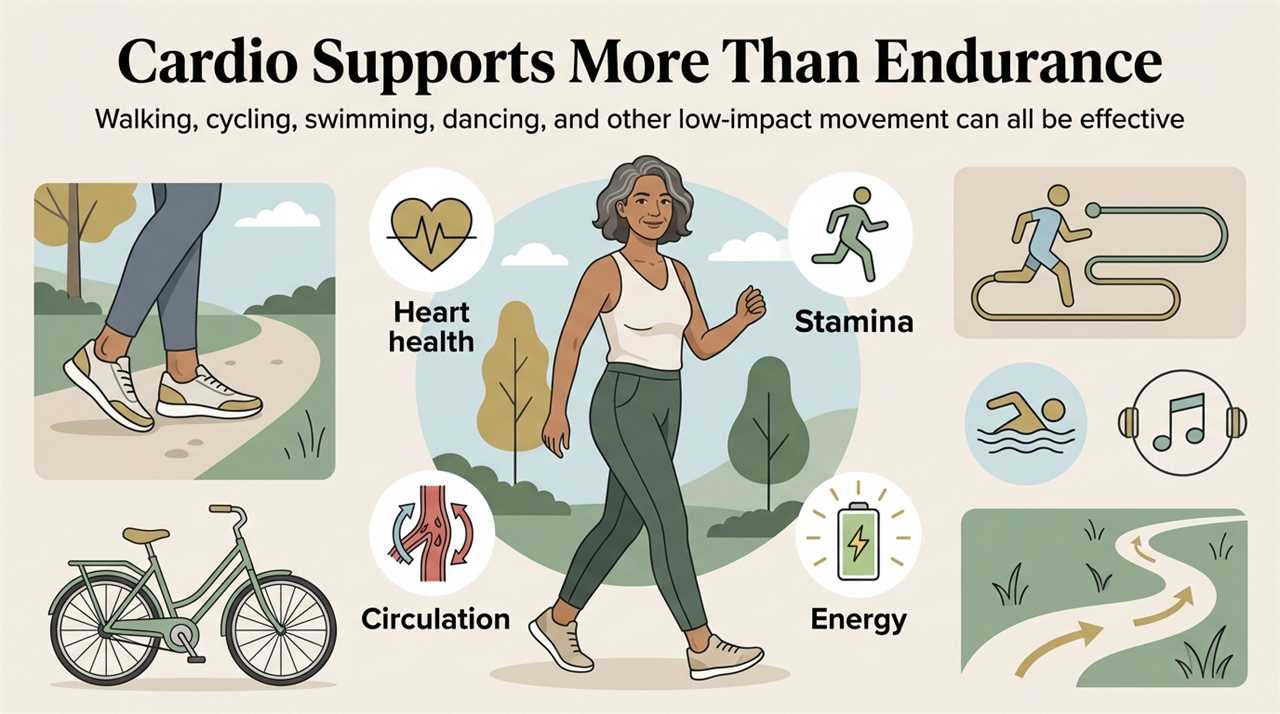
Cardio exercise supports heart health, stamina, circulation, and energy. It does not have to mean intense running. Walking, cycling, swimming, dancing, and other low-impact options can all be effective.
Balance
Balance becomes more important with age because it supports confidence, movement, and fall prevention. Exercises that challenge balance in a safe and controlled way can help preserve stability over time.
The Best Way to Start
One of the biggest mistakes adults make after 40 is trying to do too much too soon. They get motivated, start a hard routine, become overly sore or discouraged, and then stop. A better approach is to begin with consistency instead of intensity.
Start with what your body can handle now, not what it used to handle. That might mean walking three days a week, doing short strength sessions twice per week, and adding a few minutes of stretching each day. The goal is to create momentum without overwhelming the body.
For many adults, the hardest part is simply getting started again. If that is where you are, begin with how to start exercising again after years of inactivity.
How to Build a Beginner Routine
A simple beginner routine does not need to be complicated. It should include a manageable combination of movement, strength, and recovery. For example, a good weekly plan might include walking on most days, two or three short strength workouts, and a few brief sessions of stretching or mobility work.
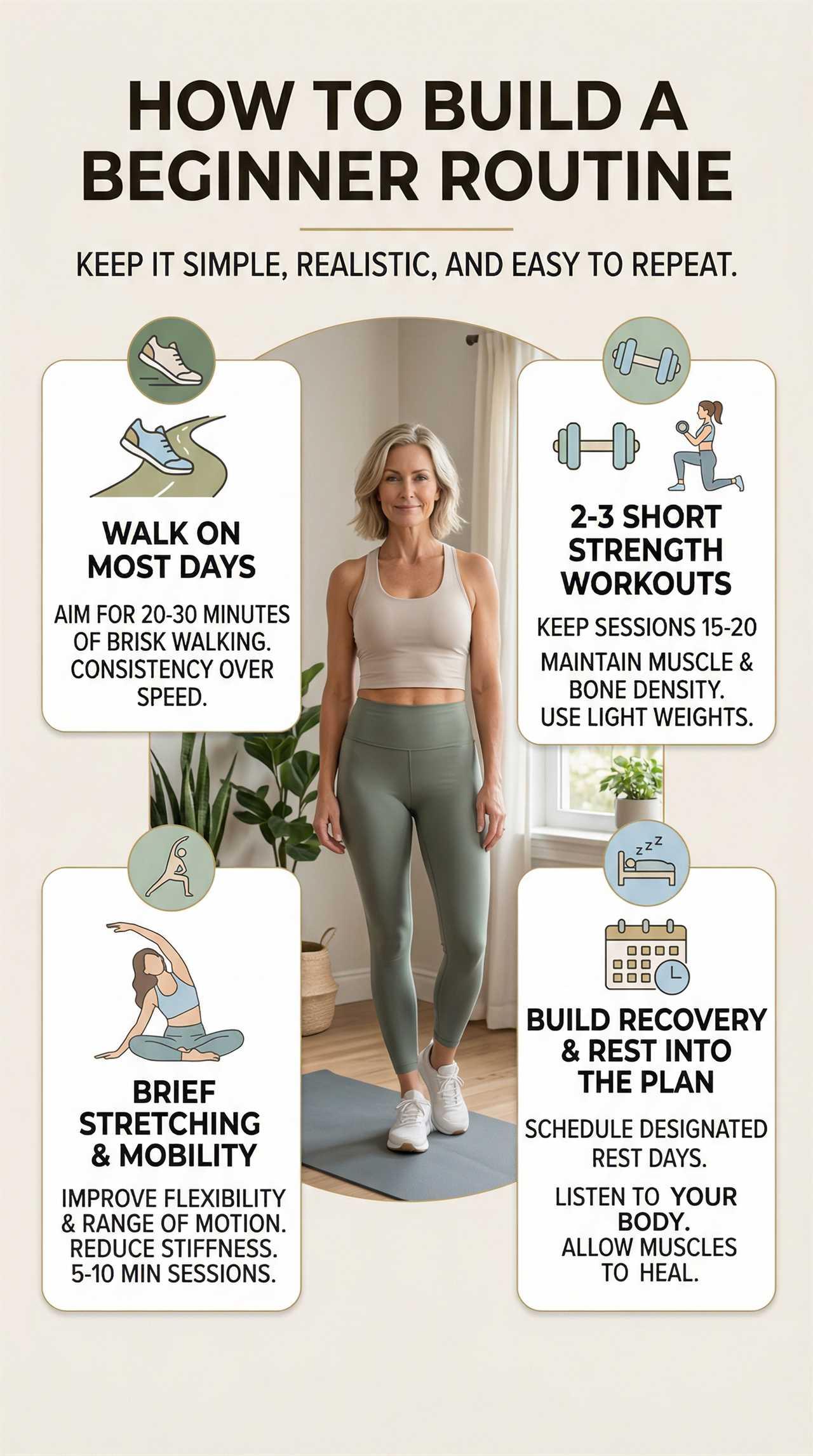
This kind of routine helps cover the basics without making exercise feel like an all-or-nothing project. It also gives the body time to adapt. Progress becomes easier when the plan is realistic enough to repeat for weeks and months, not just a few days.
For practical ideas, read best beginner workouts for adults over 40.
Common Problems That Get in the Way
Many adults know exercise is important but still struggle to stay consistent. Sometimes the problem is lack of time. Other times it is fear of injury, frustration with past attempts, soreness, low energy, or not knowing what kind of workout to do.
These struggles are common, but they can be managed with a smarter approach. Fitness after 40 usually works better when it is flexible, simple, and based on the goal of long-term function rather than short-term punishment. Adults tend to do better when the routine feels supportive instead of extreme.
A good way to avoid setbacks is to understand fitness mistakes people over 40 should avoid.
How Often Adults Over 40 Should Exercise
There is no one perfect number that fits everyone, but consistency matters more than occasional bursts of effort. Adults over 40 often do well with some form of daily movement, plus structured exercise several times per week. That may include walking most days, strength work two to three times weekly, and some combination of mobility, stretching, or balance work throughout the week.
The exact amount depends on your starting point, recovery, schedule, and comfort level. The key is to build a rhythm that feels sustainable rather than exhausting. For a more specific answer, read how often should adults over 40 exercise.
Recovery Matters More Than People Think
One of the reasons many adults struggle with fitness after 40 is that they underestimate the importance of recovery. Rest is not wasted time. It is part of how the body gets stronger. Sleep, hydration, nutrition, lighter movement days, and avoiding overtraining all matter.
Some soreness is normal when starting again, but constant exhaustion, joint pain, or the feeling that every workout is too much may be signs that the routine needs adjustment. A good program challenges the body without constantly breaking it down.
Fitness and Mindset After 40
Mindset plays a major role in long-term success. Many adults become discouraged because they compare their current body to their younger body, or because they expect fast results. That kind of comparison often leads to frustration.
A better mindset is to focus on what fitness is helping you do now. Better energy. Less stiffness. Improved balance. Stronger legs. Easier mornings. Better sleep. More confidence in movement. These are meaningful results, and they often matter more than appearance alone.
Progress after 40 is still absolutely possible. The body can get stronger, more mobile, and more capable with consistent effort. The goal is not perfection. It is steady improvement.
A Simple Weekly Fitness Plan for Adults Over 40
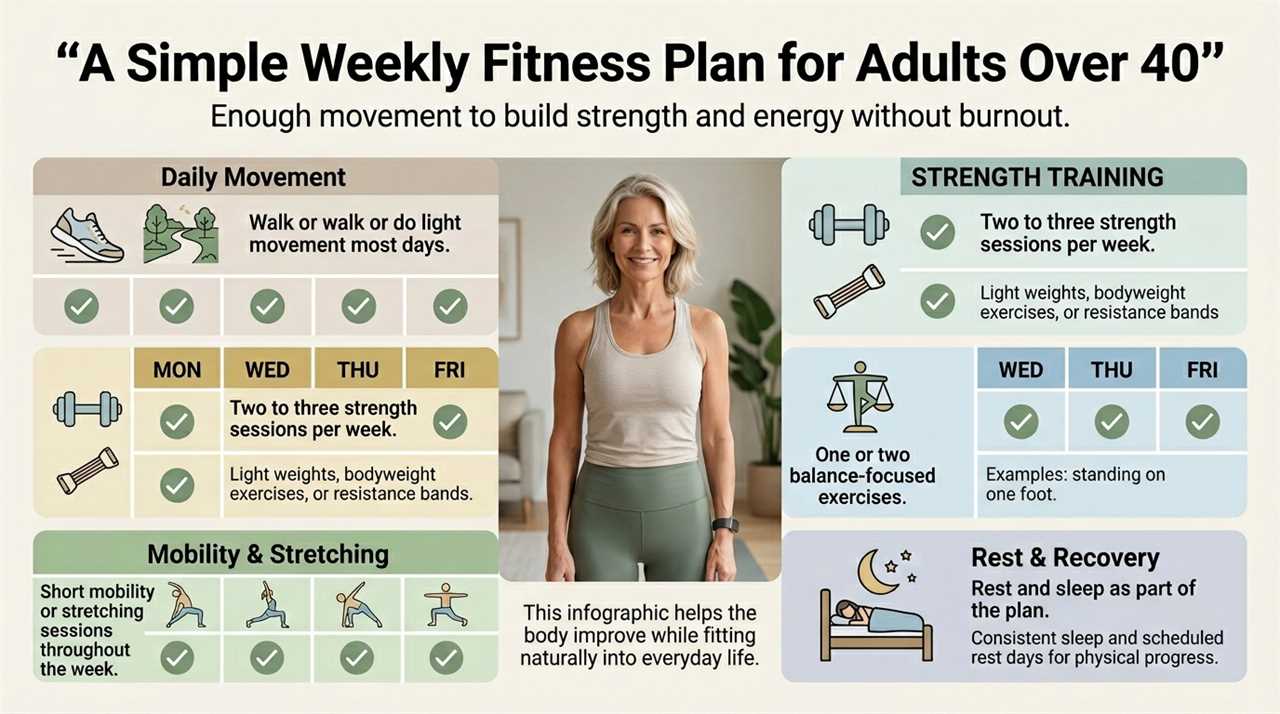
A basic weekly structure might look like this:
- walk or do light movement most days,
- do two to three strength sessions per week,
- include short mobility or stretching work throughout the week,
- add one or two balance-focused exercises,
- and make sure rest and sleep are part of the plan.
This kind of schedule gives the body enough movement to improve without creating unnecessary burnout. It also helps fitness feel like part of life rather than a separate project that is too hard to maintain.
Final Thoughts
Fitness over 40 is not about trying to outwork aging. It is about working with the body in a smarter way. Strength, mobility, cardio, balance, and recovery all play a role in helping the body stay capable and resilient. The most important thing is not choosing the hardest routine. It is choosing one that helps you keep going.
You do not need to be in perfect shape to start. You do not need long workouts or an advanced plan. You need a simple routine, realistic expectations, and the willingness to begin where you are. Over time, those efforts can make daily life feel easier, stronger, and more energized.
The best time to start is before you feel forced to. The second-best time is now.
Frequently Asked Questions
Is it harder to get fit after 40?
It can feel different after 40 because recovery, stiffness, and energy may change, but adults can still build strength, stamina, and mobility with consistent effort.
What type of exercise matters most after 40?
Strength training, walking or cardio, mobility work, and balance exercises all matter because they support function, energy, and long-term health.
How should beginners start fitness after 40?
Beginners should start with simple, manageable movement such as walking, short strength sessions, and stretching instead of trying intense routines too soon.
Can adults over 40 still make fitness progress?
Yes. Adults over 40 can improve strength, balance, posture, endurance, and confidence in movement with a realistic and consistent routine.