
How you begin the day can shape how you feel physically, mentally, and emotionally for hours afterward. Morning routines matter because they create momentum. They can support energy, reduce stiffness, improve focus, and make healthy choices feel easier to follow throughout the rest of the day. For adults over 40, a strong morning routine can be especially valuable because the body often responds better to consistency than chaos.
A good morning routine does not need to be long or complicated. In fact, the best one is usually simple enough to repeat on ordinary days. It should support movement, hydration, nourishment, and mental readiness without feeling overwhelming. The purpose is not to build a perfect morning. It is to create a healthier start that supports aging well over time.
If you want the full big-picture strategy behind building energy, strength, and resilience in midlife, start with this guide to healthy aging after 40 and then use the routine below as a practical daily starting point.
Wake Up With Consistency
One of the most underrated parts of a healthy morning routine is simply waking up at a similar time each day. The body tends to function better when sleep and wake patterns are more predictable. A consistent wake time can support better energy during the day and make it easier to maintain a more stable evening routine as well.
You do not need to wake up extremely early for this to help. What matters more is rhythm. A more regular sleep-wake pattern often improves how the day feels overall.
Drink Water First
After hours of sleep, the body often needs hydration. Starting the day with water is one of the easiest ways to support energy, digestion, and mental clarity. Many people reach for coffee first, but drinking water before caffeine can help the body feel more awake and balanced.
This habit is simple, but it creates a good foundation. It also encourages you to think of the morning as a time to support the body rather than just rush into the day.
Move Before You Sit Too Long
Morning stiffness becomes more common with age, especially after a night of little movement. A few minutes of walking, stretching, or mobility work can help loosen the body and improve circulation. This does not need to be an intense workout. Gentle movement is often enough to reduce stiffness and make the body feel more ready for the day.
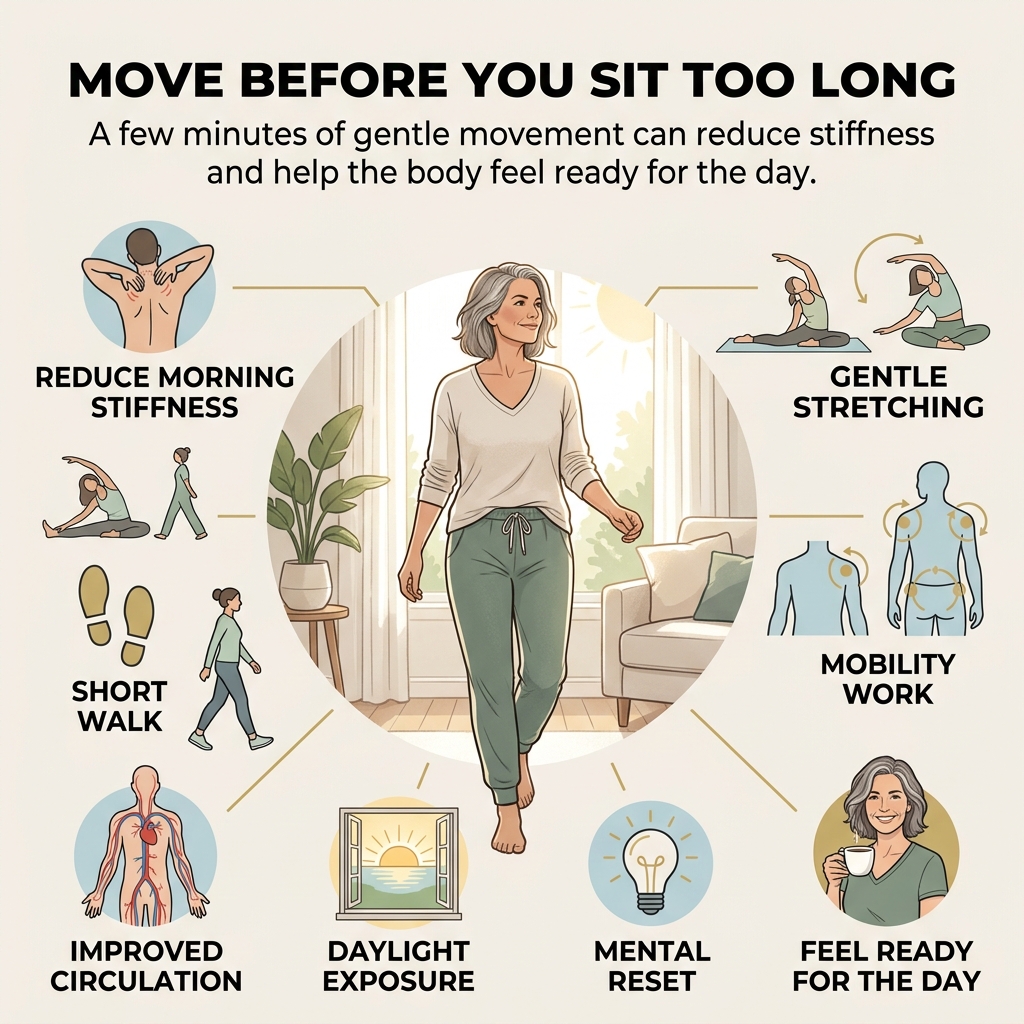
A short walk outdoors can be especially helpful because it combines movement, daylight, and a mental reset. If going outside is not practical, a few stretches and basic movements at home can still help. You can build on this with daily habits that support healthy aging naturally.
Get Daylight When Possible
Morning daylight can support alertness and help regulate the body’s internal rhythm. It may also help support better sleep later at night. Stepping outside for a few minutes, opening curtains, or spending part of the morning in natural light can be a helpful addition to a healthy aging routine.
This habit is especially useful for adults who feel groggy, sluggish, or mentally foggy in the morning. Light exposure can help signal that the day has begun.
Eat a Supportive Breakfast
Breakfast does not need to be complicated, but it should help the body rather than work against it. Many adults over 40 benefit from a breakfast that includes protein, such as eggs, Greek yogurt, cottage cheese, protein oats, or another balanced option. Protein can help support muscle maintenance, energy, and fullness.
A breakfast built mostly around sugar or refined carbohydrates may lead to a quicker energy crash later. The goal is to choose a first meal that helps create steadier energy and better appetite control.
Avoid Immediate Stress Overload
Many people start the day by jumping straight into bad news, notifications, work demands, or mental pressure. That can make the body feel stressed before the day has even properly begun. A healthier morning routine allows a little space before the noise takes over.
This could mean avoiding your phone for the first few minutes, taking a quiet walk, praying, journaling, breathing deeply, or simply sitting in peace for a short time. A calmer start often creates a calmer response to the rest of the day.
Review the Day With Intention
Aging well is supported by consistency, and consistency is easier when the day has direction. Taking one or two minutes in the morning to think through meals, movement, appointments, or priorities can help reduce stress and support better choices.
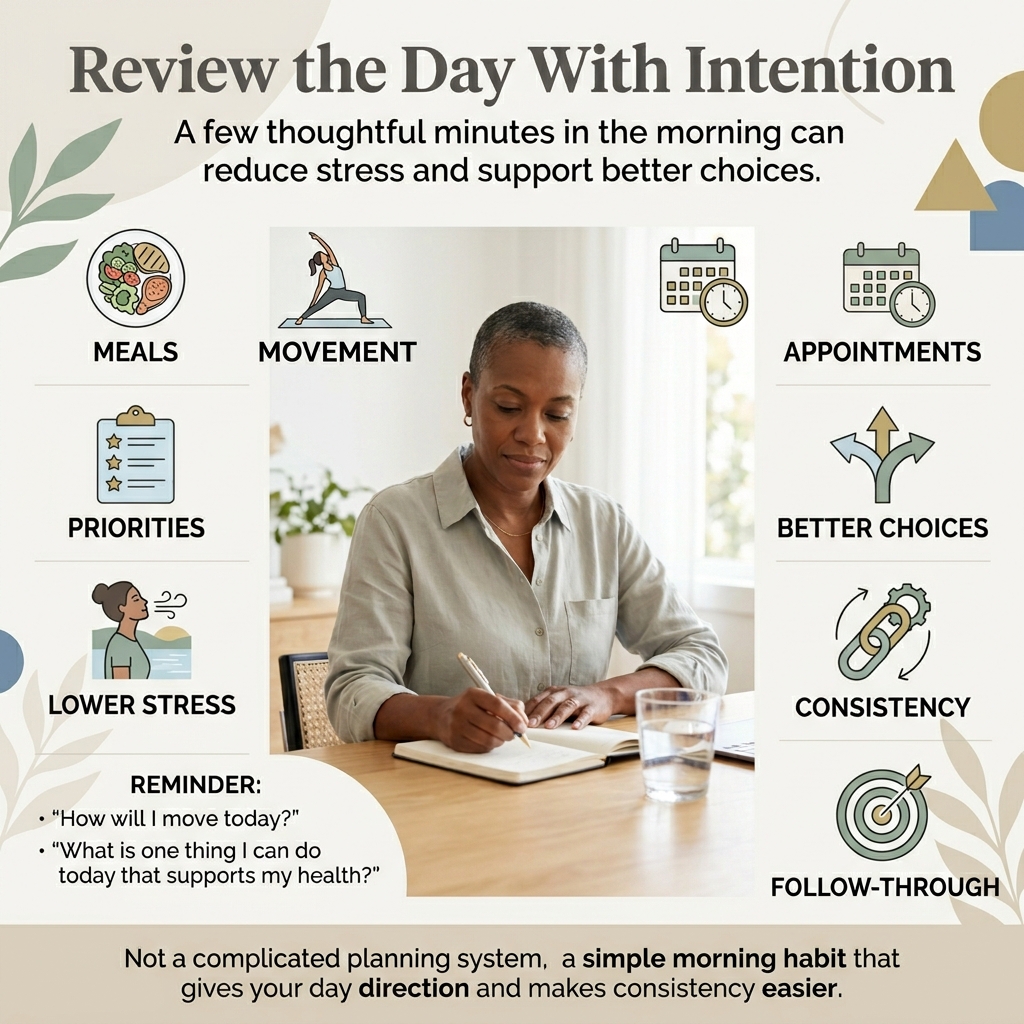
This does not need to become a complicated planning system. It can be as simple as asking, “How will I move today?” or “What is one thing I can do today that supports my health?” Small intention often leads to better follow-through.
Include a Little Strength When Possible
Not every morning needs a full workout, but some adults do well with short resistance-based movement early in the day. A few squats, wall push-ups, resistance-band work, or light strength exercises can help maintain muscle and wake the body up.
This can be especially useful for people who struggle to fit exercise in later. Even a short routine performed regularly can make a meaningful difference over time.
Keep It Simple Enough to Repeat
The best morning routine is not the one with the most steps. It is the one you can keep doing. A realistic routine might look like this: wake at a similar time, drink water, move for 5 to 15 minutes, get daylight, eat a protein-rich breakfast, and take one quiet moment before the demands of the day begin.
That kind of routine is not flashy, but it supports healthy aging in practical ways. It helps the body feel less stiff, less rushed, and more supported.
A Sample Morning Routine for Healthy Aging After 40
A simple example could look like this:
Wake up at a consistent time. Drink one glass of water. Take a 10-minute walk or do gentle stretching. Open the curtains or step outside for daylight. Eat a balanced breakfast with protein. Spend a few quiet minutes planning your day, praying, journaling, or simply breathing before checking messages.
This kind of start supports movement, hydration, nourishment, and mental steadiness. Those are all important parts of aging well.
Final Thoughts
The best morning routine for healthy aging after 40 is one that supports the body without becoming a burden. You do not need a complicated system to feel the benefits. Consistent wake times, hydration, movement, light exposure, nourishing food, and a calmer mental start can all help improve how the day unfolds.
Morning routines matter because they shape momentum. A healthier start often leads to healthier choices later, and those repeated choices play a major role in how well you age.
FAQ
What is the best morning routine for healthy aging after 40?
A strong routine includes consistent wake times, water, gentle movement, daylight, a protein-rich breakfast, and a calm mental start to the day.
Why is hydration important in the morning?
Hydration supports energy, digestion, and mental clarity after sleep. Drinking water early can help the body feel more balanced before caffeine.
Should adults over 40 exercise in the morning?
Light movement in the morning can reduce stiffness and improve circulation. It does not have to be intense to be beneficial.
Is breakfast important for healthy aging?
For many adults, a balanced breakfast with protein helps support muscle maintenance, energy, and better appetite control throughout the day.