
Getting older does not have to mean getting weaker, slower, or less capable. For many adults, turning 40 becomes the point where health starts to feel more personal. Energy may not come as easily as it once did. Recovery can take longer. Joints may feel stiffer in the morning. Sleep may change. Weight may become harder to manage. Even simple routines that once felt automatic can start to require more intention.
That does not mean decline is guaranteed. It means the body responds better to consistency, smarter habits, and supportive routines. Healthy aging after 40 is not about chasing youth. It is about protecting strength, mobility, energy, mental sharpness, and independence so life can still feel active, meaningful, and enjoyable in the years ahead.
The good news is that healthy aging is influenced by daily choices more than many people realize. What you eat, how often you move, how well you sleep, how you manage stress, and how you care for your body over time all play a role. Small habits done repeatedly can have a bigger long-term effect than occasional bursts of motivation. The goal is not perfection. The goal is to build a lifestyle that supports your body instead of draining it.
This guide explains what healthy aging really means after 40, what changes are common, what habits matter most, and how to create a practical routine that helps you stay strong and independent.
What Healthy Aging Really Means
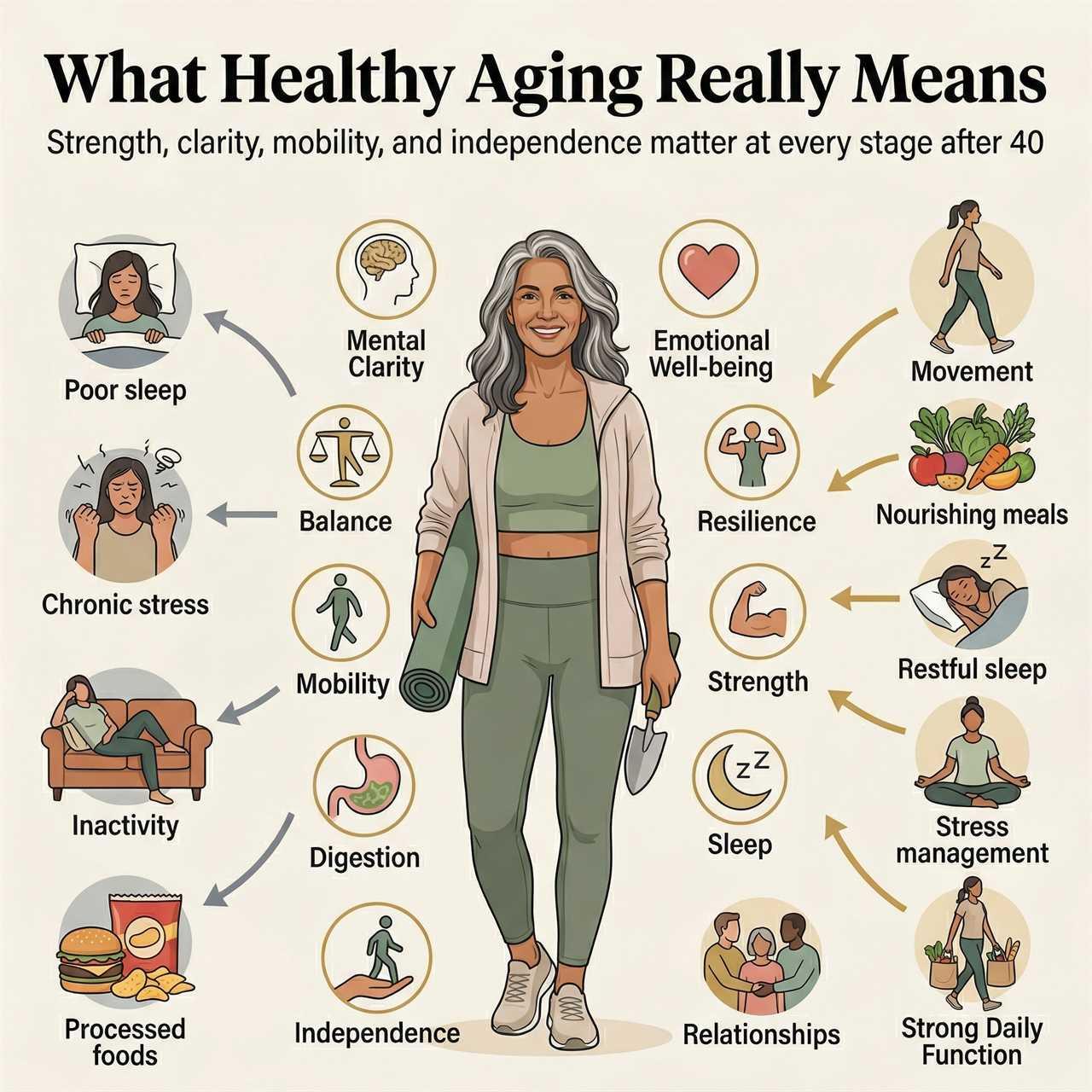
Healthy aging is often misunderstood. Many people think it simply means living longer. In reality, it means living better. It means maintaining the ability to move well, think clearly, manage daily tasks, enjoy relationships, and stay as independent as possible. It means reducing preventable decline and supporting the systems of the body that affect quality of life.
Healthy aging includes physical health, mental clarity, emotional well-being, balance, mobility, strength, digestion, sleep, and resilience. It is not defined by one number on a scale or one blood test result. It is reflected in how you feel, how you function, and how well your body supports everyday life.
For adults over 40, healthy aging becomes more important because this is often the stage when long-term patterns begin to show their effects. Years of poor sleep, chronic stress, inactivity, processed foods, and neglect can start to catch up. On the other hand, this is also the perfect stage to turn things around. Positive changes made in midlife can improve how the body feels now while also supporting long-term health later.
Common Changes After 40

Aging is natural, but some changes become more noticeable after 40. Understanding them can help you respond early instead of assuming they are something you must simply accept.
Muscle mass tends to decline gradually with age, especially when strength training and adequate protein are missing. This can affect metabolism, balance, posture, and daily energy. Joint stiffness can also become more common, especially for people who sit for long periods or do not move enough throughout the day. Sleep may become lighter or more interrupted, which can affect focus, mood, cravings, and recovery.
Hormonal changes can also influence how the body feels. Some adults notice more fatigue, mood changes, slower recovery, or changes in body composition. Stress can feel more physically draining than it once did. Digestion may become more sensitive. Even hydration can have a greater effect on energy and focus.
These changes can feel discouraging, but they are also signals. They often point to areas that need more support. Instead of seeing them as proof that aging is going badly, it helps to see them as reminders to become more intentional.
The Foundations of Healthy Aging
Healthy aging does not depend on one miracle food, one supplement, or one exercise program. It is built on a few consistent foundations that work together over time.
Daily Movement
The body is designed to move. Regular movement supports circulation, joint health, balance, energy, mood, and independence. It does not have to be extreme. Walking, strength training, stretching, balance work, and low-impact exercise can all help the body stay capable and resilient.

Movement also helps preserve muscle, which becomes especially important after 40. Strong muscles help protect joints, improve posture, support blood sugar balance, and make daily tasks easier. Even basic activities such as getting up from a chair, carrying groceries, climbing stairs, or staying steady on uneven ground depend on strength and mobility.
Nourishing Food
Food becomes increasingly important with age because the body often becomes less forgiving of poor habits. A diet built around whole foods, quality protein, fiber-rich carbohydrates, healthy fats, fruits, vegetables, and proper hydration can support energy, digestion, brain health, and body composition.
Many adults benefit from paying more attention to protein, fiber, and nutrient density after 40. Protein helps preserve muscle. Fiber supports digestion, blood sugar balance, and fullness. Nutrient-dense foods help supply the vitamins and minerals needed for bones, muscles, nerves, and overall well-being.
Sleep and Recovery
Sleep is one of the most overlooked parts of healthy aging. Poor sleep affects memory, appetite, stress hormones, mood, healing, and energy. It can make healthy habits harder to maintain because tired people often move less, snack more, and feel less motivated.
Recovery is not laziness. It is part of the process of staying strong. Adults over 40 often do better when they balance activity with rest, avoid overtraining, and create routines that support better sleep.
Stress Management

Chronic stress affects nearly every system in the body. It can contribute to poor sleep, higher cravings, irritability, tension, fatigue, and reduced motivation. Over time, unmanaged stress can make healthy aging feel much harder than it needs to be.
Stress management does not always require complicated routines. Deep breathing, walks, quiet time, better boundaries, prayer, mindfulness, journaling, hobbies, and social connection can all help reduce the burden stress places on the body. To better understand one major factor behind fatigue, tension, and poor recovery, read how stress affects aging and what to do about it.
Preventive Habits
Healthy aging is easier when problems are addressed early. Preventive care, routine checkups, healthy body weight, hydration, regular movement, and awareness of changing symptoms can all make a difference. Prevention is not fear-based. It is a practical way to stay informed and proactive.
Why Independence Matters More With Age
One of the biggest goals of healthy aging is preserving independence. Independence means being able to care for yourself, move through daily life with confidence, and continue participating in the activities that matter to you. It affects dignity, confidence, and overall happiness.
Independence is supported by many small physical abilities that people often overlook until they begin to decline. Strength helps with lifting, standing, and carrying. Balance helps reduce fall risk. Mobility helps you reach, turn, bend, and move without pain. Mental clarity supports decision-making and confidence. Energy helps you stay engaged in life rather than withdrawing from it.
This is why healthy aging should not be treated as a cosmetic goal. It is a practical one. The stronger and more capable you remain, the more freedom you preserve. For a closer look at this specific topic, read how to stay independent as you get older.
The Role of Daily Habits

Aging well is shaped by what happens every day. Big changes can be helpful, but daily habits are what make results stick. A healthy aging routine does not need to be complicated. In fact, simpler routines are often easier to maintain over the long term.
One of the most effective approaches is to focus on repeatable habits. A short morning walk. A protein-rich breakfast. Drinking water before coffee. Going to bed at a more consistent time. Stretching for a few minutes. Taking short breaks from sitting. Choosing whole foods more often. These habits may seem small in the moment, but they build momentum.
If you want a practical place to start, read daily habits that support healthy aging naturally to see how small actions can create a stronger foundation over time.
How to Build a Healthy Aging Routine
The best routine is not the most intense one. It is the one you can realistically follow. Healthy aging routines work best when they are built around your actual life, not an idealized version of it.
Start by choosing one habit in each of the following areas: movement, food, sleep, and stress. For example, you might walk for 20 minutes each day, add protein to breakfast, go to bed 30 minutes earlier, and spend 10 minutes in quiet reflection in the evening. That is already a strong start.
Once those habits feel easier, build from there. Add balance work twice a week. Improve hydration. Replace one ultra-processed snack with a whole-food option. Strength train two to three times each week. Add more vegetables to lunch and dinner. Keep the changes simple enough that they can survive busy weeks and imperfect days.
One of the biggest mistakes adults make after 40 is trying to change everything at once. That often leads to burnout. Consistency is more powerful than intensity. Progress that lasts is usually built through small wins.
Warning Signs You Should Not Ignore
Not every symptom is just part of getting older. Some signs deserve more attention. Persistent fatigue, unexplained weakness, severe sleep disruption, sudden weight changes, ongoing digestive issues, frequent dizziness, memory changes that feel unusual, and worsening pain should not be brushed aside.
Healthy aging includes paying attention to the body. When something feels off, it is worth exploring rather than assuming it will pass. The earlier concerns are addressed, the easier they often are to manage.
Healthy Aging and Mindset
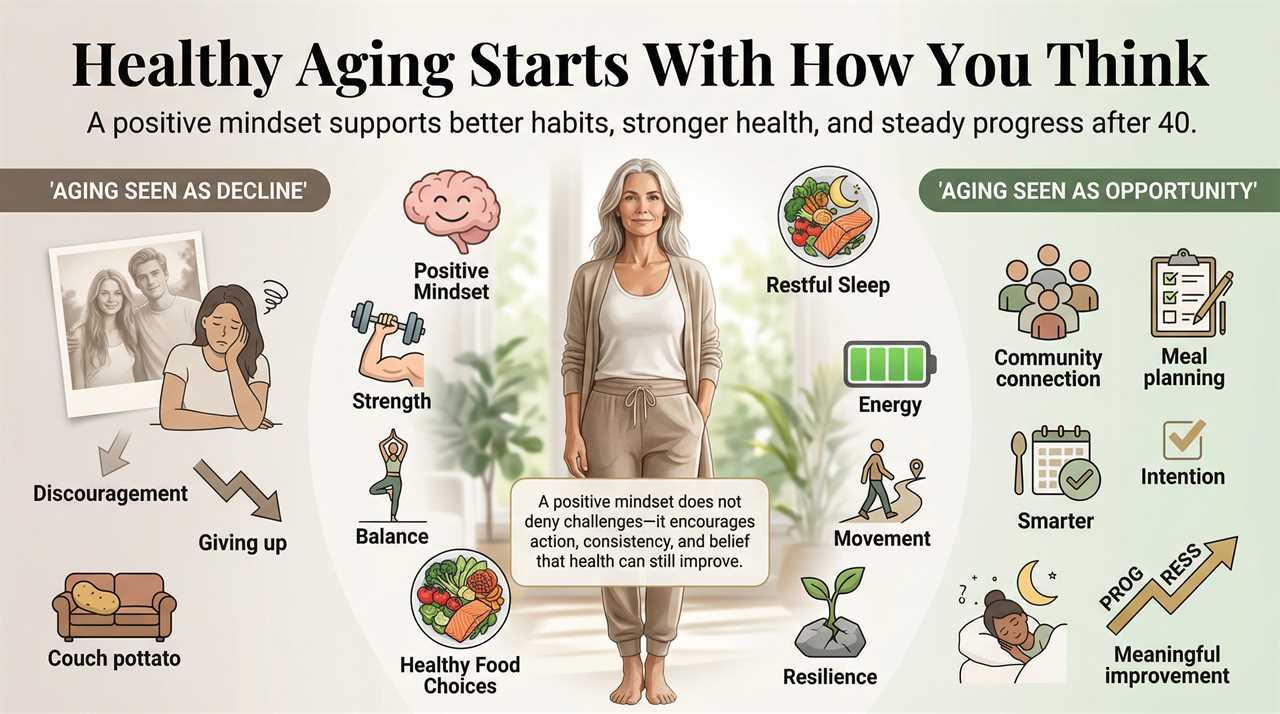
The way people think about aging can influence how they care for themselves. If aging is viewed only as decline, it becomes easier to give up. If it is viewed as a stage that requires better support, smarter habits, and more intention, it becomes easier to act in ways that protect health.
A positive mindset does not mean denying challenges. It means believing that many aspects of health can still improve. Adults over 40 can gain strength, improve balance, build healthier eating patterns, sleep better, and feel more energetic. Progress is still possible. The body often responds surprisingly well when given the right support.
A Simple Weekly Healthy Aging Plan
A healthy aging plan does not need to be elaborate. A simple structure can make things more manageable.
On most days, aim to move your body in some way. Walking, stretching, mobility work, and light activity all count. Two to three times per week, include strength training or resistance-based exercise. Eat meals that include protein, fiber, and whole foods as often as possible. Drink water regularly. Try to maintain a consistent sleep schedule. Create a small daily habit that lowers stress. Check in with yourself each week and notice what is helping and what needs adjusting.
A strong first step is creating a best morning routine for healthy aging after 40 that supports energy, movement, hydration, and focus from the start of the day.
This kind of steady rhythm may not feel dramatic, but it is often what creates lasting results.
Final Thoughts
Healthy aging after 40 is not about trying to stop time. It is about giving your body and mind the support they need to function well for as long as possible. Strength, independence, clarity, and resilience are worth protecting. The best part is that many of the habits that support healthy aging are simple, realistic, and available to most people right now.
You do not need a perfect routine. You need a sustainable one. Start with the basics. Move every day. Eat in a way that supports your body. Protect your sleep. Manage stress. Pay attention to what your body is telling you. Build habits that make daily life easier instead of harder.
Healthy aging is not created in one day. It is built through what you repeatedly do. The sooner you begin, the more support you give your future self.
FAQ
What does healthy aging after 40 mean?
Healthy aging after 40 means protecting strength, mobility, energy, mental clarity, and independence through daily habits that support long-term well-being.
Why does the body change more after 40?
After 40, adults may notice changes in muscle mass, recovery, sleep, stress tolerance, and body composition. These shifts often make healthy habits more important.
What are the most important habits for healthy aging?
Some of the most important habits include daily movement, strength training, nourishing food, good sleep, stress management, hydration, and preventive care.
Can adults over 40 improve their health naturally?
Yes. Many adults over 40 can improve energy, strength, mobility, and overall well-being by becoming more consistent with simple healthy routines.