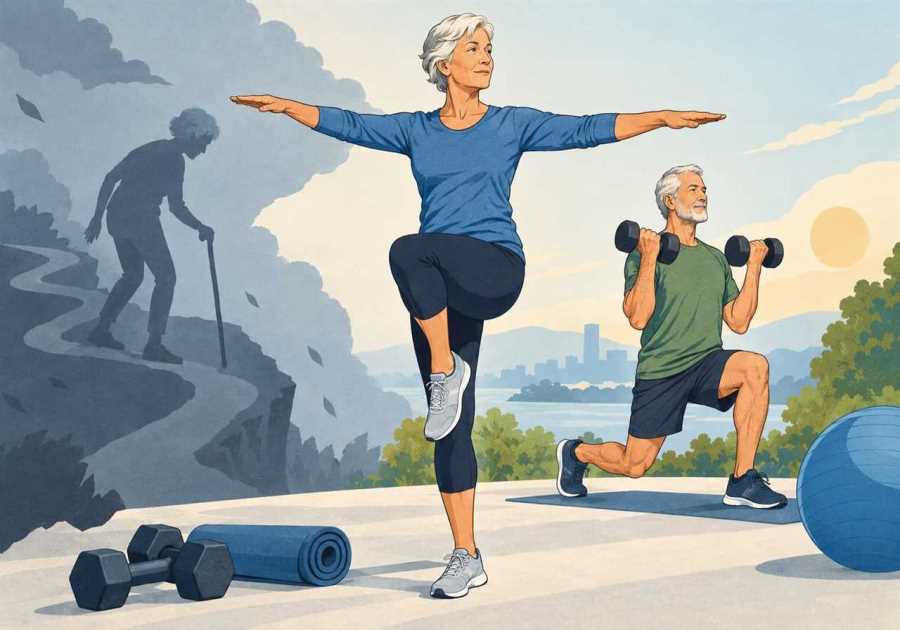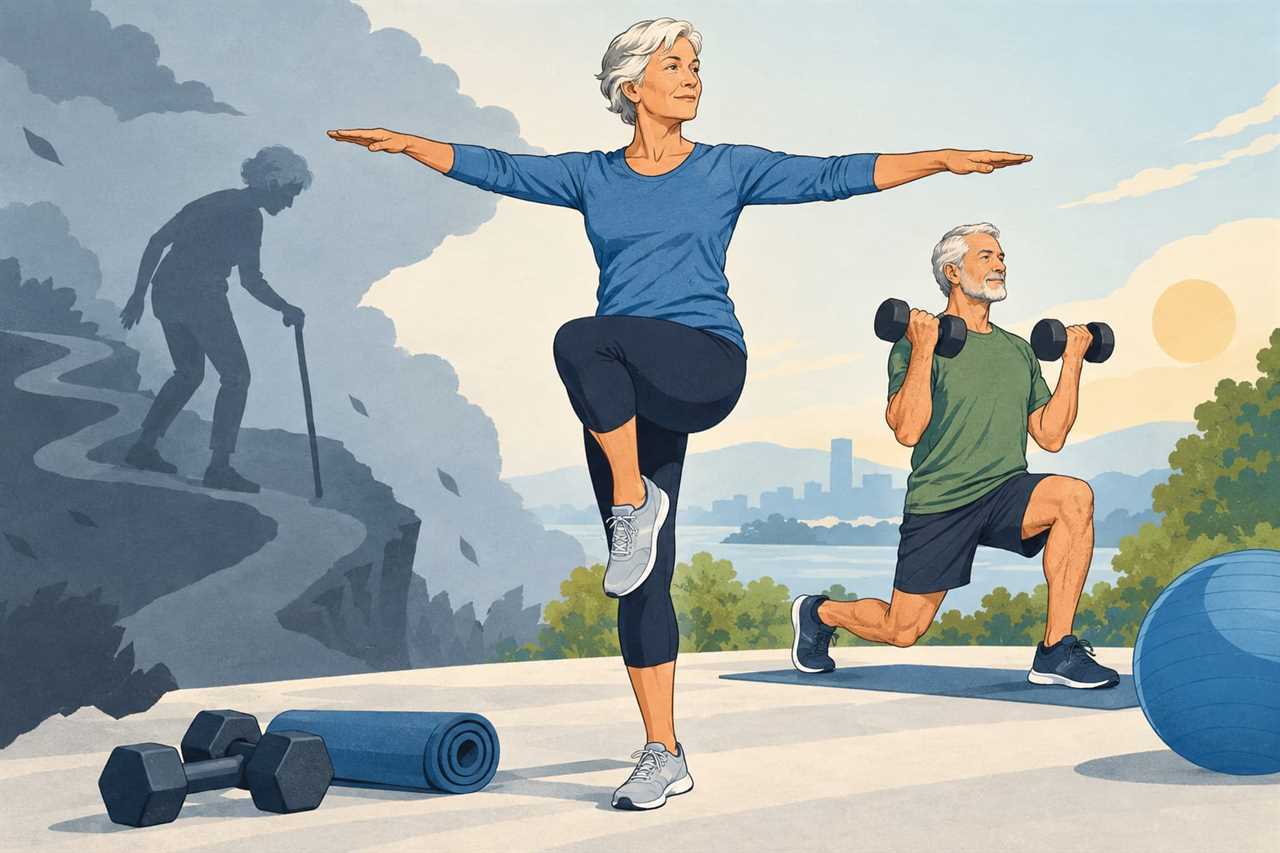
You know that moment when you trip on a curb and catch yourself without even thinking? That reflex isn't luck. It's muscle. And according to the doctors at Cedars-Sinai, it's one of the first things we lose as we get older — unless we fight back.
I'm closing in on 70, and I've spent the last several years hauling luggage through airports, climbing uneven trails, and generally putting my body through things a lot of people my age wouldn't attempt. So when I came across this piece from Cedars-Sinai about balance and strength training for seniors, I paid attention. Turns out the science backs up what I've been doing by instinct.
The Real Reason Falls Happen
"We see an awful lot of skeletal muscle injuries and fractures as people get a little older," says Dr. Joshua Scott, a primary care sports medicine specialist at Cedars-Sinai. Most of it traces back to two things: osteoporosis, which thins out bone density, and sarcopenia, the natural loss of muscle mass that comes with age.
Dr. Sara Espinoza, medical director of the Healthspan Clinic and Center for Translational Geroscience at Cedars-Sinai, points out that women face extra risk here, since bone loss often speeds up after menopause.
Here's the part that matters most: it's not the bone loss alone that puts people on the ground. It's what happens when you stumble. "If you stumble or trip and you're not strong enough to react and catch yourself, you can quickly end up on the ground with a hip fracture or some other injury," Scott says.
In other words, strength is what buys you that split second to save yourself.
The Good News: It's Never Too Late
I hear this excuse a lot: "Lifting weights is for young people trying to look good in the mirror." Scott hears it too, and he's not buying it. "This is a lifestyle change for long-term health," he says. "There's no reason why someone in their 60s, 70s, 80s or beyond shouldn't be lifting weights."
Espinoza agrees that the earlier you start, the better — but she's just as clear that starting late still counts. "If you haven't started, it's never too late to exercise," she says.
That's the whole philosophy behind Adventure Has No Age Limit, if you ask me. Age isn't a wall. It's just information. What you do with your body today still shapes what you're capable of tomorrow, whether that's climbing stairs at home or climbing a trail in Patagonia.
How Often Should You Train?
The American College of Sports Medicine recommends resistance training at least twice a week. But don't rush it. Scott warns that the biggest mistake people make is going too hard, too fast. "People often try to go too hard too fast and then quit after a few weeks or injure themselves," he says. "Go at a pace you can sustain."
If you've got osteoporosis, arthritis, heart disease, or existing balance issues, Espinoza suggests checking with your doctor or a physical therapist before diving in.
The Exercises That Actually Work
Cedars-Sinai's exercise physiologist Gary Weaver put together a set of moves that cover the major muscle groups — you don't need to do all of them every session, just 4 to 10 per workout.
For the lower body and balance: sit-to-stand (rising from a chair without using your hands, eventually progressing to body-weight squats), single-leg stands near a counter for stability training, step-ups onto a low platform, lateral lunges, Romanian deadlifts for the hamstrings and glutes, farmer's carries for grip and core, and calf raises off the edge of a step.
For the upper body: push-ups (started against a wall or counter if the floor is too tough at first), bench presses, overhead presses, and dumbbell rows.
Machines can work too, but Scott and Weaver point out something interesting — machines support your body weight for you, which means they train less of your balance and coordination than free-weight or body-weight versions do. If your goal is staying upright in real life, not just in the gym, that's worth knowing.
So What Happens If You Start Today?
I've never been one to wait for the "right time" to try something new — whether that's a new country, a new business, or apparently, a new squat routine. The research here is clear: muscle and bone respond to stress by getting stronger, at any age.
So here's a genuine question for you: what's stopping you from picking up a dumbbell this week? Not next month. This week.
Source: Cedars-Sinai
Earlier in this series: The Best Drinks to Support Healthy Aging, According to Dietitians