What if the secret to a healthier heart and sharper brain isn't a supplement or a drug, but something way smaller than either — a protein so tiny it's made right inside your cells' power plants?
That's the question a team of researchers has been chasing, and what they found is worth paying attention to, especially if you're someone who eats a lot of olive oil, fish, and vegetables and wonders if it's actually doing anything.
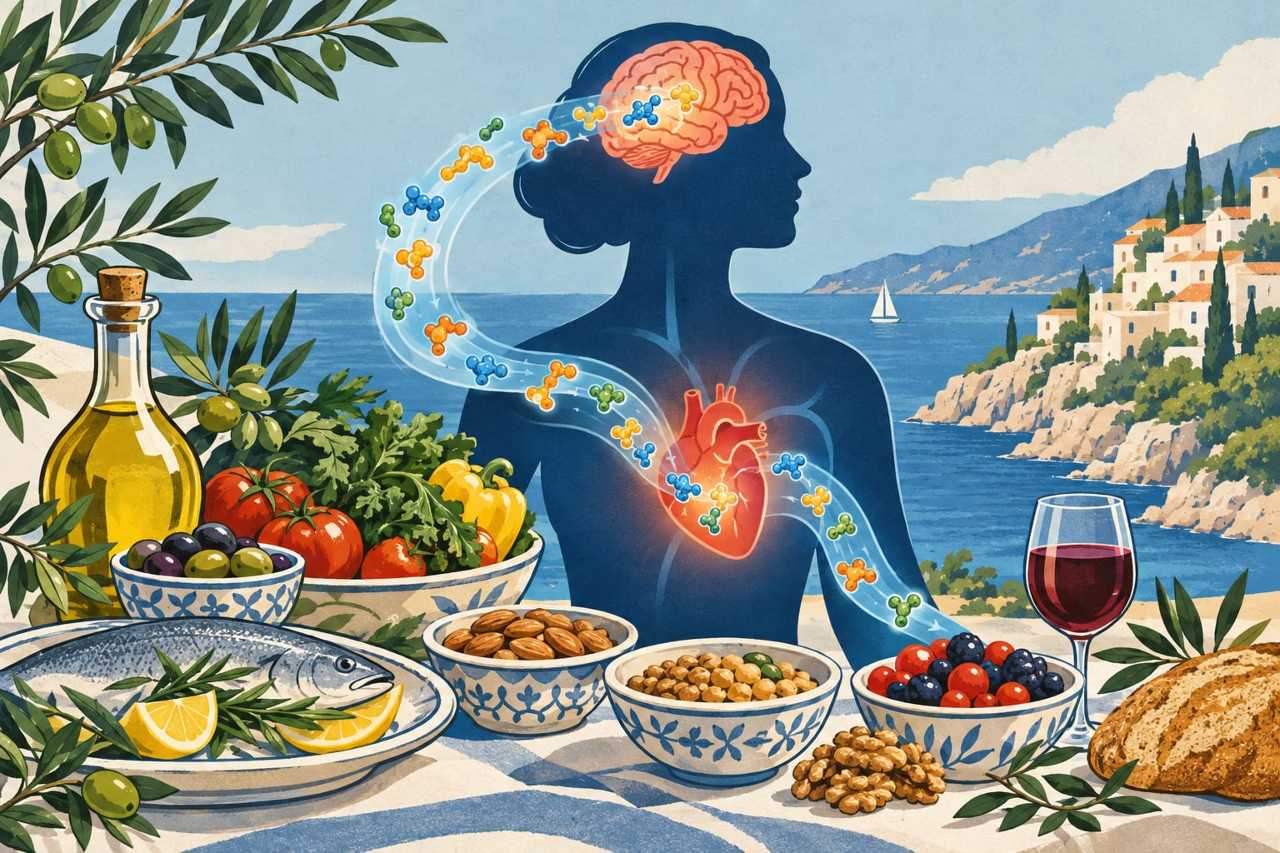
Here's the setup. Your mitochondria aren't just energy factories. Scientists have known that for a while. But it turns out they also make their own tiny proteins, called microproteins, using instructions tucked inside their own DNA — not the DNA in your cell's nucleus. Some of those DNA segments were once written off as junk. Turns out they're not junk at all.
One of these microproteins is called humanin. Researcher Pinchas Cohen first identified it back in 2003, and since then it's been linked to better insulin sensitivity, stronger cardiovascular health, longer lifespan, and protection for your thinking ability as you age. Another one, discovered more recently by Cohen's team, has a name that sounds like a hobbit character: SHMOOSE. A certain genetic variant of it is tied to higher Alzheimer's risk, while the normal version seems to shield brain cells from damage linked to amyloid, the protein that builds up in Alzheimer's patients' brains.
A Clue Hiding in Your Blood Vessels
Here's where it gets interesting. The researchers, including Dr. Mattia Vicinanza, found that people with higher humanin levels tended to have lower activity of an enzyme called Nox2. Nox2 helps your body make reactive oxygen species — useful in small doses for immune defense and cell signaling, but damaging to blood vessels when there's too much of it floating around.
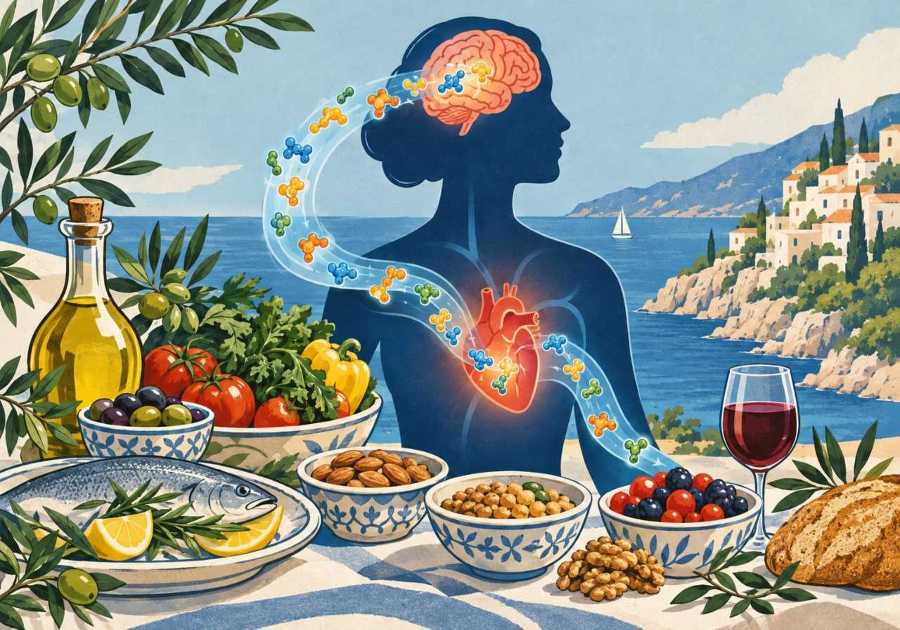
So the theory goes like this: the Mediterranean diet might protect your heart two ways at once. It directly lowers oxidative stress, and it may also boost these microproteins that help keep that same oxidative damage in check. Two mechanisms working together instead of one.
"This could represent a new cardioprotective mechanism of the Mediterranean diet," Vicinanza said.
I like that word — mechanism. Not a hunch, not a trend. An actual biological pathway researchers are starting to map out.
Cohen put it this way: "These peptides are emerging as key regulators of aging biology. They connect mitochondrial function to diseases like Alzheimer's and heart disease and now, potentially, to nutrition."
Why This Matters Beyond the Lab
Vicinanza hasn't just studied the Mediterranean diet in a lab — he's helped promote it worldwide. He worked with the Municipality of Pollica, Italy, a UNESCO-recognized Mediterranean Diet community, and that collaboration helped lead to the United Nations establishing an International Day of the Mediterranean Diet, observed every November 16.
I've spent plenty of meals in small towns around the Mediterranean, watching people eat slow, simple food that hasn't changed much in generations. Vicinanza's comment about that stuck with me: "We're connecting centuries-old dietary traditions with cutting-edge molecular biology. It supports the idea that healthy eating patterns with little to no ultra-processed foods reflect how humans have eaten over long periods and may create conditions to which mitochondria — ancient cellular organelles — are likely adapted."
That's a fancy way of saying your cells might still be waiting for you to eat like your great-grandparents did.
What We Don't Know Yet
Before anyone starts marketing "humanin-boosting" olive oil, let's be honest about the limits here. This was a small, observational study. It shows a relationship, not proof that the diet causes these protein changes or that the proteins themselves prevent disease. Other lifestyle factors could be influencing the results too.
The next step, Vicinanza says, is figuring out whether eating Mediterranean-style actually raises these microproteins, and whether that translates into real improvements in heart health, brain function, or disease risk. "Our goal is to move from observing associations to understanding causality," he said.
So what do you do with this today? Nothing dramatic. Just keep eating the way you probably already suspect is good for you — more plants, more olive oil, less processed junk. Science is still catching up to explain why it works. That's usually how it goes. The old wisdom gets there first, and the lab notes follow years later.
Source: Science Daily
If you missed it: Three Exercises You Can Do Without Even Leaving Your Kitchen