Here's a question worth asking yourself: when's the last time you stood on one leg while brushing your teeth?
Sounds silly. But an orthopedic surgeon says it might matter more than your next gym membership.
Dr. Vonda Wright, an orthopedic surgeon and longevity expert, says you don't need an hour-long workout or a fancy gym to protect your bones and muscles as you get older. You need three simple movements, done in small bursts throughout your day. No equipment. No excuses.
"We're all really busy, and yet we need to fit in things that are critical for our health," Wright told TODAY.com. And she means that literally — these moves take seconds, not hours.
The Three Moves
First up: balance on one leg. Do it while you're doing dishes. Do it while you're brushing your teeth. Do it waiting for the bus. Wright's point is that balance isn't something you train once at a class — it's something you lose quietly over the years if you stop practicing it. And losing it is how falls happen. Falls are how bones break.
Second: jump. Twenty times a day, "like you mean it," Wright says. Ten in the morning, ten at night. Jumping is impact. And impact, it turns out, sends a signal straight to your bone cells that says: build more bone, make it denser. You can't fake that signal sitting on a couch.
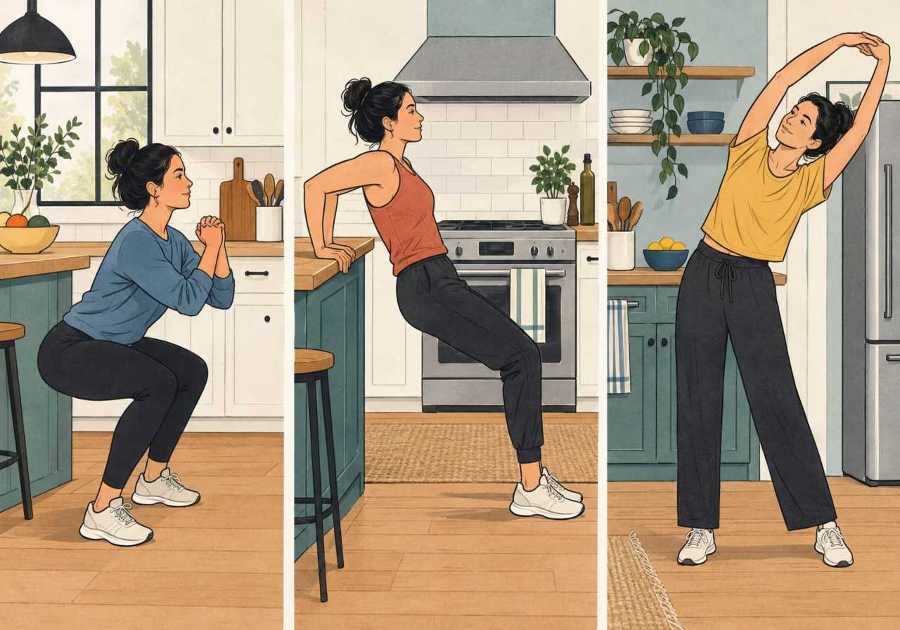
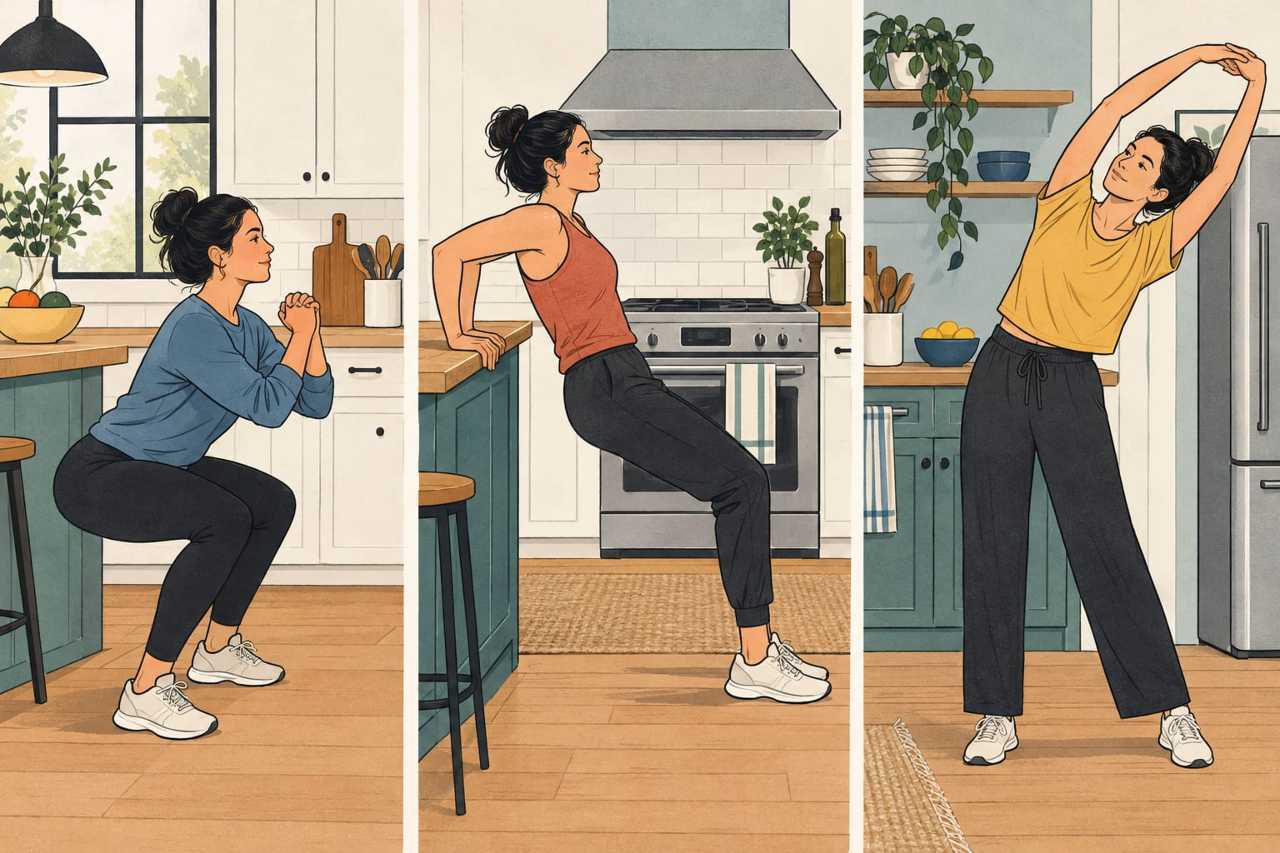
Third: chair squats. Stand up, squat down toward a chair, back up again — as fast as you safely can, for one minute, three times a day. That's it. The goal isn't strength alone. It's getting your heart rate up enough, often enough, to support your cardiovascular system over the long haul.
Why This Works
What I like about this is that none of it requires believing some new supplement or buying new gear. It's just retraining your body to do what it used to do without thinking — stand steady, land from a jump, get up off a chair quickly.
Wright puts it simply: "We need to retrain our balance so that we do not fall and break a bone." That's the whole game with aging well, isn't it? Not adding years for the sake of it, but staying capable enough to keep doing what you actually want to do.
I've spent years moving through airports with a suitcase, climbing into boats, hiking unfamiliar trails in places I'd never heard of a decade earlier. None of that happens if your balance goes or your legs can't get you up off a low seat. The exercises Wright describes aren't about looking fit. They're about staying free to keep moving through your life — whatever that life looks like for you.
Starting Small
If jumping sounds like a bad idea for your knees right now, Wright says start with heel drops or stomping your feet instead. Work up to it. "Eventually, we do want to clear the air and jump down," she says — and she even suggests drawing hopscotch on the sidewalk with your grandkids. Which, honestly, sounds like more fun than most gym routines I've tried.
If a full chair squat is too much, start by sitting down and just standing back up. Don't worry about hitting a full minute right away. "Just progressively work up to one full minute as hard as you go," Wright says, "and you'll be surprised at how fast you will progress."
And for balance, stand near a counter or sink so you've got something to grab if you wobble. Nobody's asking you to be a gymnast on day one.
So What Now?
I'm not 40 anymore, and I'm not interested in pretending the body works the same way it did back then. But I am interested in what keeps working if you ask it to. Wright's three moves cost nothing, take minutes, and fit into a life already in motion — which is exactly the kind of life worth protecting.
So try it tomorrow. Balance while the coffee brews. Jump twenty times before bed. Squat into a chair three times through the day.
Small moves now. Bigger freedom later.
Source: NBC Bay Area
Related reading from us: Taurine Helps Regulate Inflammation Linked to Aging, Yale Study Finds