I was walking through a spice market in Marrakech a few years back, and an older gentleman next to me stopped, closed his eyes, and just breathed. Cinnamon, cumin, something floral underneath it all. He said he came to that market every week just for the smell. I thought about that moment again when I saw a new report on why our sense of smell fades after 60 — and when that fading means something more serious.
Here's the question that got me: why does smell go first, before most other senses even start to slip?
Why It Happens
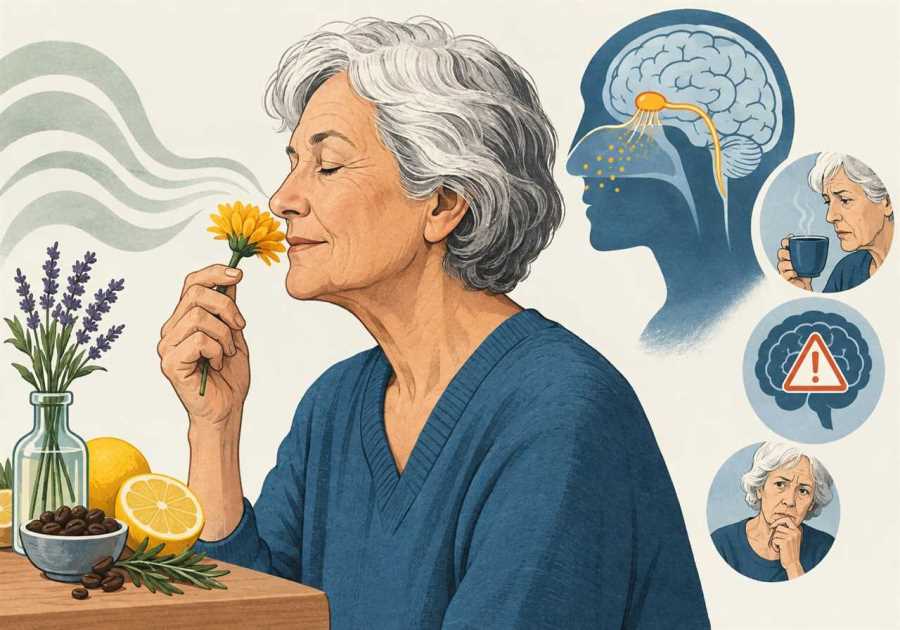
Turns out your nose isn't really the problem. It's the wiring behind it. The olfactory nerve cells that detect smell actually regenerate throughout your life — pretty remarkable when you think about it. But as we age, that regeneration slows down. Fewer receptor cells, less mucus production to carry scent molecules to where they need to go, and the nerve pathways to the brain start to thin out too.
By 60, a lot of people have noticeably weaker smell. By 80, research suggests more than half of us have some real impairment. It's not unlike hearing loss — gradual, sneaky, and easy to write off as just "getting old."
And honestly, I get why people shrug it off. I've met plenty of travelers in their 70s and 80s who've lost some sense of taste or smell and just season their food a little heavier, laugh about it, and move on. Adaptation is half the fun of aging, if you ask me.
When It's More Than Just Aging
But here's where it gets interesting — and where doctors want you paying attention. A sudden, sharp loss of smell, especially one that comes on fast rather than fading slowly, can be an early signal of something bigger. We all learned that lesson during COVID, when losing your sense of smell overnight became one of the first telltale signs of infection.
What's less talked about is the connection between smell loss and neurological conditions. Researchers have found that a declining sense of smell can show up years — sometimes a decade — before symptoms of Parkinson's or Alzheimer's appear. That doesn't mean everyone who can't smell their morning coffee is headed toward dementia. It means your nose might be an early warning system worth listening to.
So what's the difference between normal aging and a red flag? Gradual, mild decline over years, especially with no other symptoms, is usually just the natural slowdown of those regenerating nerve cells. Sudden loss, loss on one side only, or loss paired with memory issues, tremors, or balance problems — that's when it's worth a conversation with a doctor.
Why This Matters More Than You Think
Smell isn't just about enjoying a good meal or avoiding spoiled milk, although both matter plenty. It's tied to memory, to emotion, to the way we experience a place. Some of my strongest travel memories aren't visual at all — they're the smell of rain hitting hot pavement in Bangkok, salt air on a ferry in Croatia, woodsmoke in a mountain village in Peru. Lose that sense, and you lose a whole layer of how you experience the world.
That's part of why I pay attention to this stuff now, at almost 70. Not because I'm worried about slowing down, but because staying curious about my own body is no different than staying curious about a new country. What's changing? Why? What can I do about it?
Turns out there's actually something you can do. Smell training — deliberately sniffing strong scents like rose, lemon, clove, and eucalyptus for a few minutes a day — has shown real promise in slowing decline and even improving function in some older adults. It's one of those "what happens if I try this" experiments worth running on yourself.
So if your coffee doesn't smell quite like it used to, don't panic. But don't ignore it either. Pay attention to the pace of the change, not just the change itself. Your nose, it turns out, might be trying to tell you something — about your health, and maybe about how much of the world you don't want to miss.
Source: Yahoo News Singapore
Catch up on our earlier post: Depression Isn't a Normal Part of Aging. So Why Do We Treat It Like One?