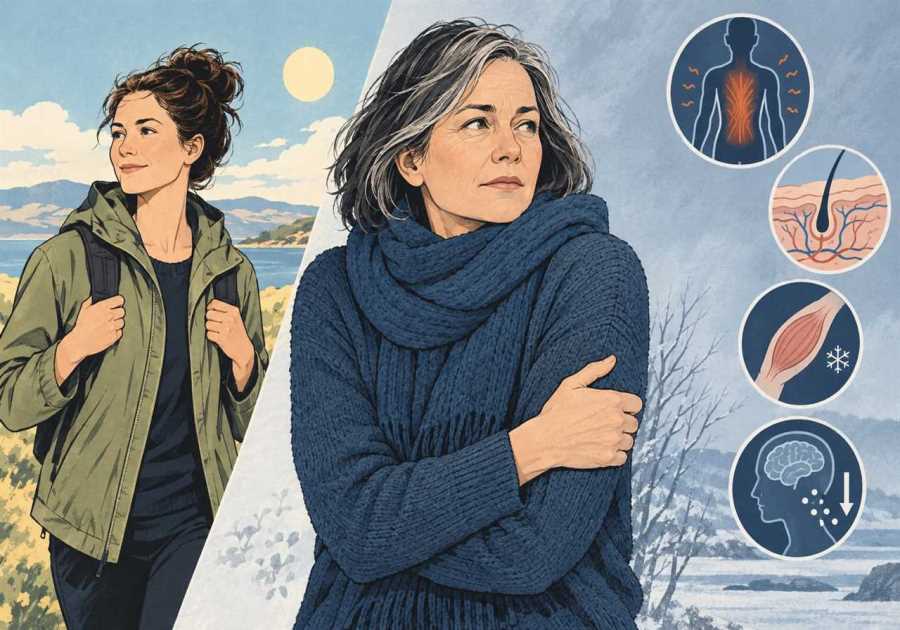
I noticed it a few winters back. Same jacket, same gloves, same thermostat setting I'd used for years — and suddenly I was cold all the time. Not dramatically cold. Just that nagging chill that makes you want to sit closer to the heater than you used to.
Turns out I'm not imagining it, and I'm not alone. As temperatures drop this season, a lot of people are noticing the same thing: the cold just hits different as you get older. So I went looking for why.
Dr Elise Dallas, a GP at London General Practice, has laid out six solid reasons this happens. And honestly, once you understand the mechanics, it makes a weird kind of sense.
Your Engine Runs Cooler
Your metabolism slows down with age. That's not news. But here's the part I didn't know — it's tied to thyroid function too. Free T3 levels decline, which lowers your metabolic rate and the amount of heat your body actually produces. Hormonal shifts, including reduced DHEA and changes in cortisol rhythm, mess with your body's thermostat as well.
Basically, the furnace that used to run hot and steady starts running on a lower setting. Nobody flips the switch — it just happens gradually.
Less Insulation, Literally
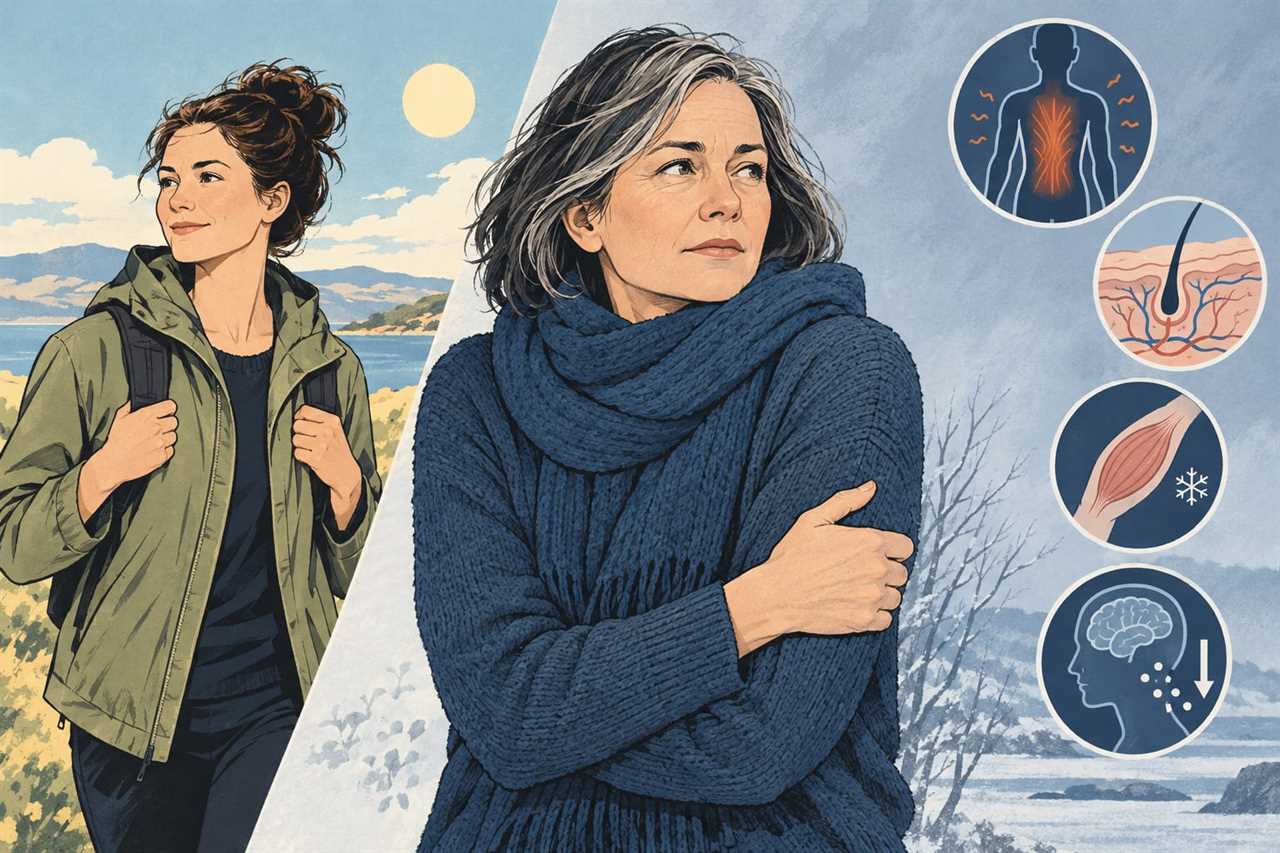
Muscle and fat both generate heat and trap it. As we age, we tend to lose muscle mass — a condition called sarcopenia — and that means less heat generation. Fat under the skin thins out too, and what's left tends to shift from your arms and legs toward your core. That leaves your hands and feet with less natural insulation, which is probably why your fingers go cold before the rest of you does.
Circulation Slows Down
Blood vessels stiffen with age and don't dilate as easily. That means blood — and the heat it carries — doesn't reach your extremities as efficiently. Your body's automatic system for managing blood flow weakens too, so it's harder to keep warmth where you need it most.
Health Conditions Play a Role
Dallas points out that chronic conditions like hypothyroidism, anaemia, diabetes, heart failure, and even Raynaud's phenomenon can all make cold sensitivity worse. Anaemia lowers oxygen delivery to tissues. Diabetes can damage nerves and blood vessels, dulling your ability to even sense the cold properly. Heart failure limits blood flow to your skin. It's a long list, but the common thread is the same — anything that interferes with circulation or energy production makes you colder.
Medications Can Make It Worse
This one surprised me. A lot of common medications — diuretics, antidepressants, blood pressure drugs like beta-blockers and calcium channel blockers — can all interfere with your body's ability to regulate temperature. If you're on multiple medications, as many older adults are, those effects can stack up without you realizing the cold you're feeling has a prescription behind it.
Why This Actually Matters
This isn't just about comfort. Dallas is clear that cold exposure can lead to real health problems for older adults — hypothermia, even indoors, increased cardiovascular risk, worse arthritis, impaired cognition, and a higher risk of falls. That's not something to shrug off with an extra sweater.
What Actually Helps
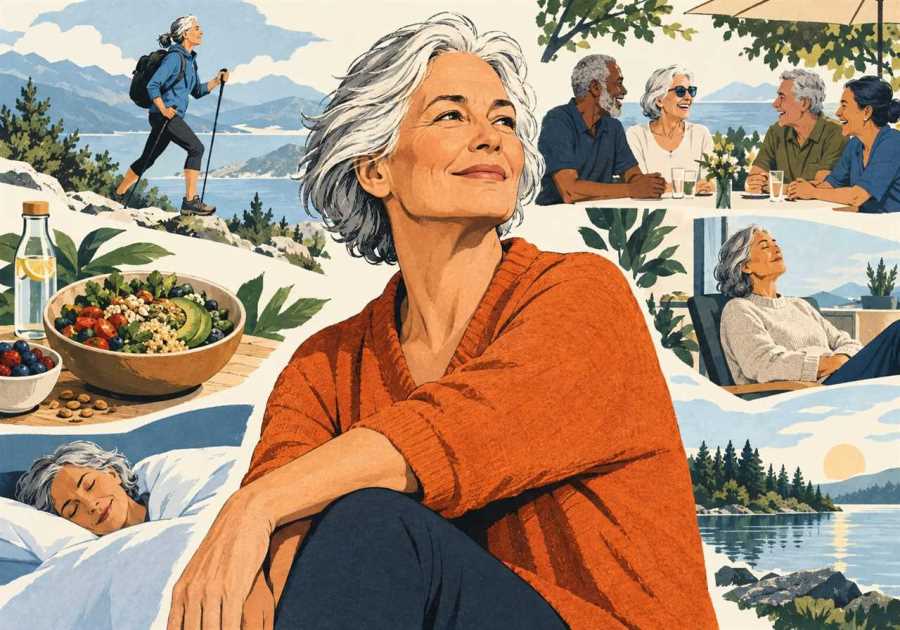
The fixes aren't complicated, but they matter. Layer up — hat, gloves, warm socks, the basics. Keep your indoor temperature at 20C or above. Use a heated blanket or hot water bottle safely. Check your windows and doors for draughts, because heat loss there adds up fast. Eat regular, warm meals, stay hydrated, and move around indoors to keep your circulation going.
I've spent years chasing warm weather instead of fighting cold winters — that's part of why I travel full-time, bouncing between seasons instead of bundling up against one. But I know not everyone has that option, and honestly, you don't need to fly somewhere warm to handle this smart.
What I've learned is that feeling the cold more isn't a sign something's wrong with you. It's your body changing, and once you understand why, you can work with it instead of just shivering through it. So what's one thing you could adjust this week — your thermostat, your layers, your afternoon walk — to make this winter a little easier on your body?
Source: The Independent
Before this, we covered: Forget the Third Chapter. Welcome to the Third Turn.