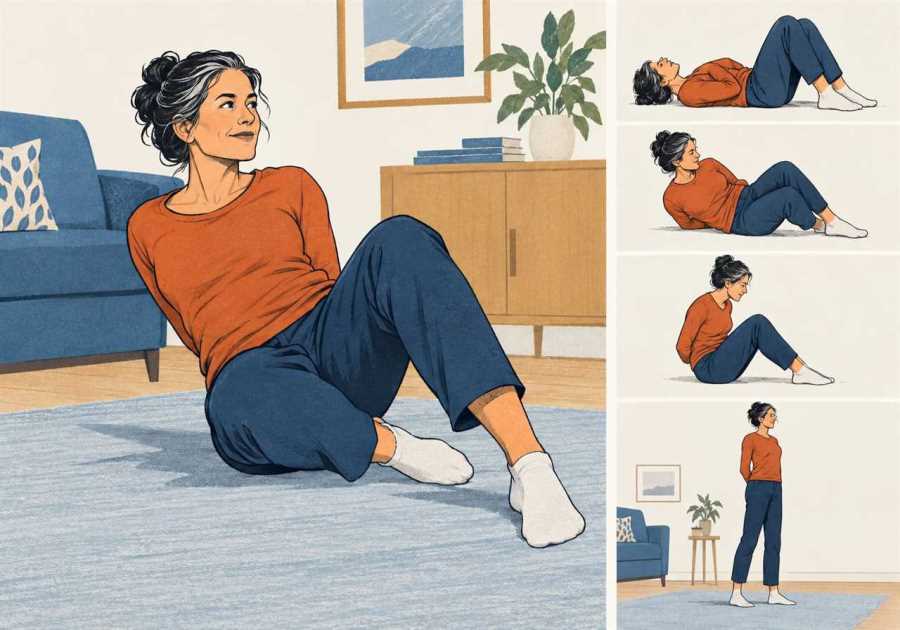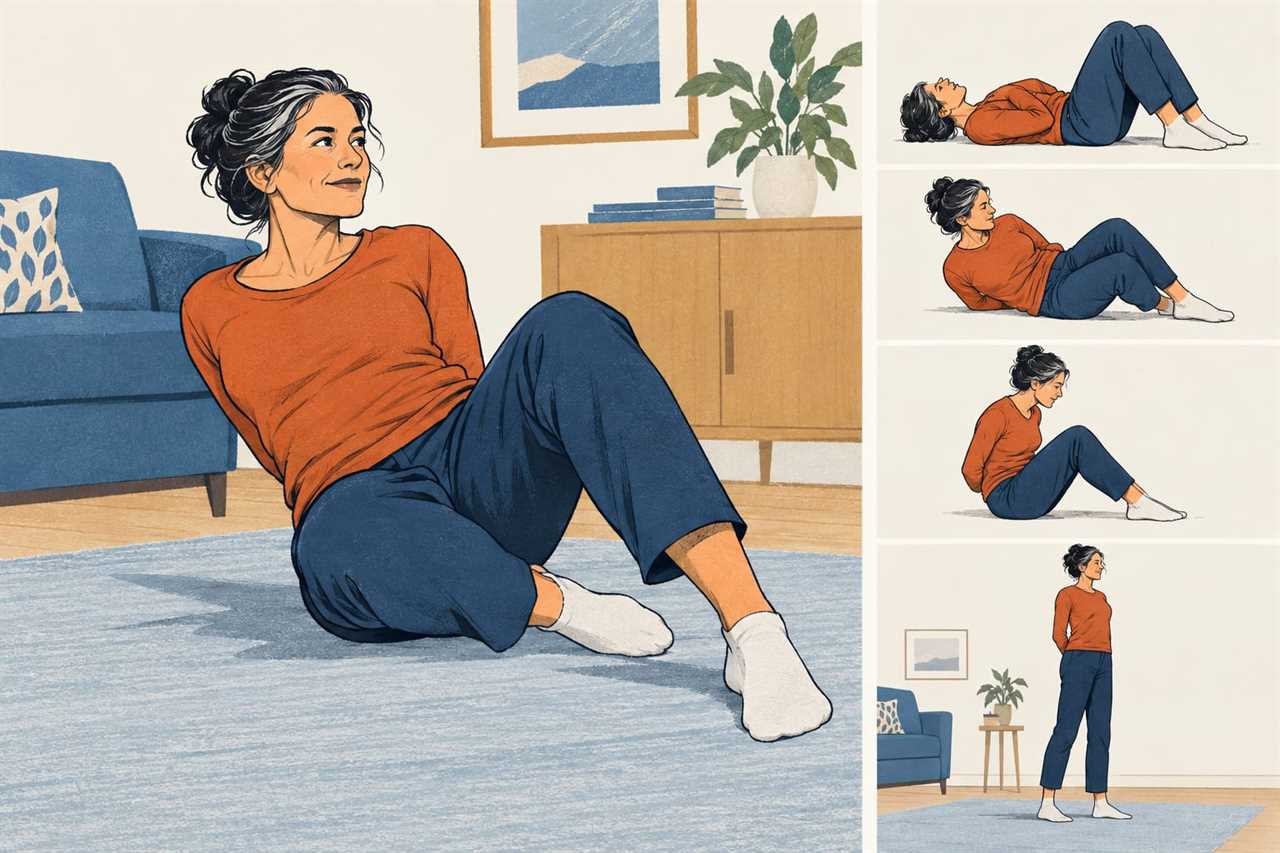
Try it right now. Sit down on the floor, then stand back up — no hands, no furniture, no cheating.
How'd that go?
Novant Health just put out a piece on five physical tasks that supposedly tell you how well you're aging. Not your resting heart rate. Not your cholesterol numbers. Just... can your body still do the stuff bodies are supposed to do.
I love this idea, because it's honest in a way lab results aren't. A blood test tells you about a moment in time. Watching yourself try to balance on one leg for ten seconds tells you something about your whole life — how much you move, how much you sit, whether your joints and muscles are still talking to each other the way they should.
The usual suspects show up on lists like this: a sit-to-stand test, where you see how many times you can pop up from a chair in 30 seconds without using your arms. A single-leg balance test. Grip strength — which sounds random until you learn it's one of the strongest predictors researchers have found for overall longevity. Walking speed over a short distance. And that floor test I mentioned, which sports medicine folks have used for years because it quietly measures strength, balance, flexibility, and coordination all at once.
Here's what gets me, though. None of these are fitness tests in the gym-bro sense. Nobody's asking how much you can bench. They're asking whether you can still do ordinary human things. Squat down to tie a shoe. Catch your balance if you trip on a curb. Carry a suitcase through an airport without your grip giving out halfway there.
I'm closing in on 70, and I've been living out of a suitcase full-time since 2017. I didn't get into this lifestyle to prove a point about aging. I got into it because sitting still bored me. But I'll admit, traveling the way I do has turned into its own ongoing physical test. Cobblestone streets in old European towns. Uneven trails in places that don't believe in guardrails. Climbing into a tuk-tuk, scrambling up a rocky overlook for a better photo, hauling a backpack up three flights of stairs because the "elevator" in a 400-year-old building is a myth.
Nobody handed me a scorecard. The road just quietly tests you, every single day.
What I like about tasks like these is they turn something vague — "am I aging well?" — into something you can actually check. You don't need a doctor's office. You don't need equipment. You need a clock, a chair, maybe a patch of floor. That's it.
And the results aren't a verdict. They're information. If you can't balance on one leg for very long, okay — now you know. That's not a life sentence, it's a starting point. Balance, grip strength, mobility — these things respond to use. Practice the floor get-up a few times a week and it stops being hard. I've watched this happen with my own habits. The things I do regularly stay easy. The things I ignore get stiff and awkward fast.
That's the part people miss about aging. A lot of what looks like "getting old" is actually "getting unused." Your body adapts to whatever you ask of it — including nothing.
So here's my challenge to you, same as I'd give myself before heading out the door for another country I've never been to: don't wait for a doctor's appointment to find out where you stand. Run through these five checks yourself. Sit-to-stand. One-leg balance. Grip something heavy. Walk at a normal pace and notice how it feels. Then do the floor test, carefully, and see what happens.
If something's harder than you expected, that's not bad news. That's just today's starting line.
Age was never going to stop me from exploring the world, and these simple tests aren't about stopping you either. They're about figuring out what your body can do right now — so you can go do something with it.
What's the next thing you want to still be able to do when you're 80? Start training for it today.
Source: Novant Health
Earlier in this series: The One Workout That Helps You Lose Fat Without Losing Muscle