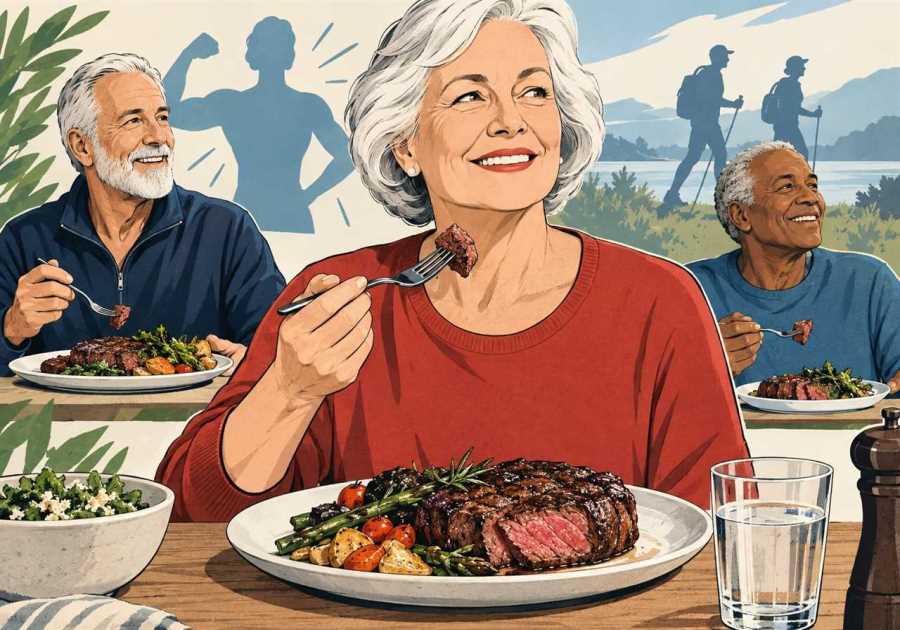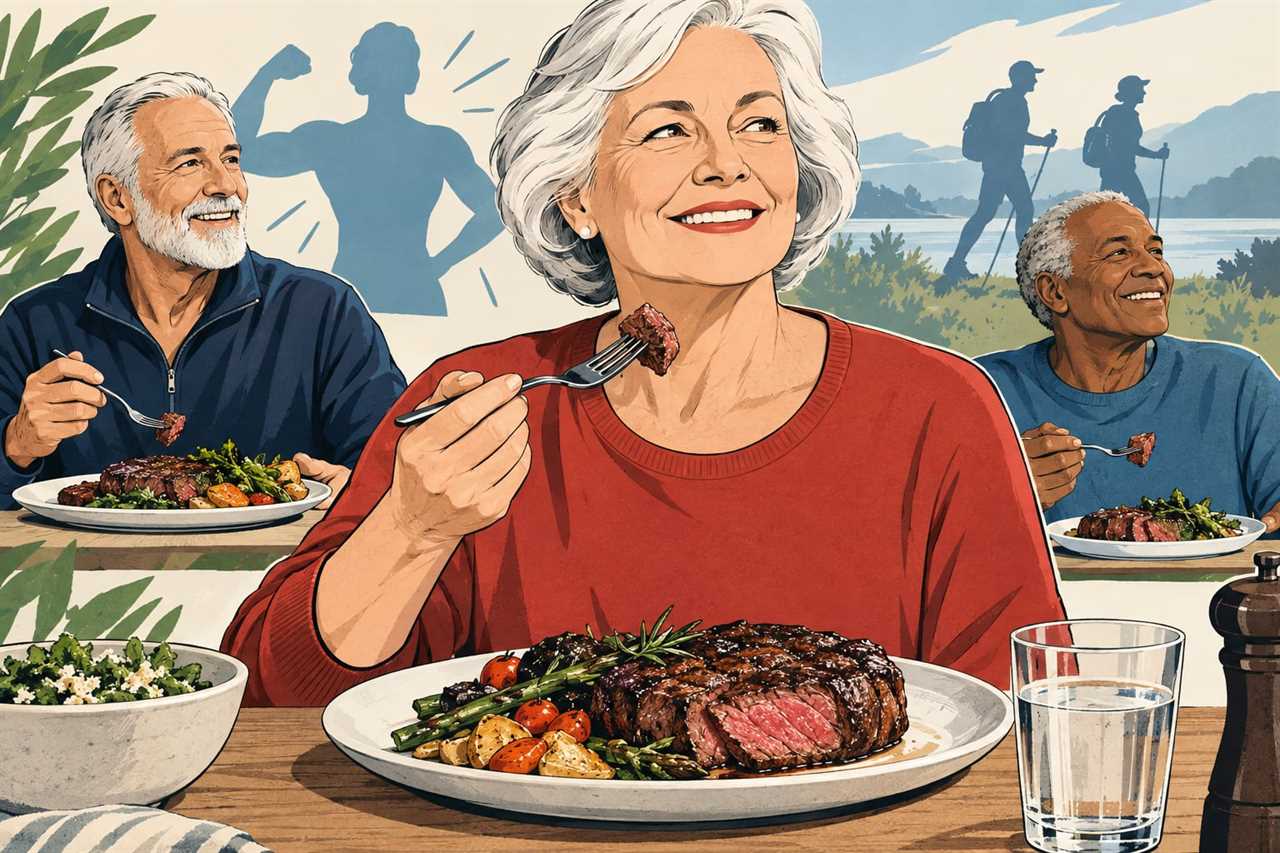
A 72-year-old in Seoul orders the ribeye. Medium rare. No apology.
That image is showing up more and more in South Korea, where a new health trend is quietly rewriting old rules: seniors eating more meat, not less. For decades the advice went the other way. Cut the red meat. Eat light. Stick to rice, vegetables, maybe some fish. Meat was for younger bodies, the thinking went, and older folks should ease off as they age.
Turns out that advice might have had it backwards.
Why would seniors need more protein, not less? Here's the thing nobody told us for years: muscle doesn't just sit there once you build it. It erodes. The medical term is sarcopenia, the gradual loss of muscle mass that speeds up after 50 and really picks up pace after 65. Less muscle means weaker grip, slower recovery from a fall, lower metabolism, even a higher risk of landing in a hospital bed you don't bounce back from. And the main building block for fighting that? Protein. The kind you get efficiently from meat.
So doctors and researchers in Korea and elsewhere are flipping the old script. Instead of telling seniors to eat less meat, they're telling them to eat enough of it, paired with resistance exercise, to hang onto the muscle they've got.
I find this stuff fascinating, honestly. I've been traveling full-time since 2017, and food has been one of my best teachers along the way. In Argentina I sat down to parrillas with gauchos who've been eating beef their whole lives and are still riding horses into their 80s. In Japan I've shared meals with elders who swear by small portions of everything, meat included, and who move like people half their age. Different cultures, different plates, but the same thread: nobody's diet stayed frozen at some arbitrary "senior" setting. They adjusted based on what actually kept them strong.
That's the real lesson here, isn't it? So much of what we accept as "just how it is when you get older" is really just outdated advice nobody bothered to question. Eat less. Slow down. Take it easy. I've never been much for taking advice at face value, especially when it comes with an expiration date attached to your birthday. If the body's demand for protein increases with age because muscle loss accelerates, then the old rule of cutting back on meat doesn't make much sense anymore. It's one of those assumptions that sounded reasonable until someone actually studied it.
This matters to you whether you're 50 or 90. It's not really about meat. It's about questioning the default settings people hand you as you age. What happens if you actually bump up your protein instead of trimming it? What happens if you lift something heavier twice a week instead of assuming your joints can't take it? I've asked myself versions of that question constantly these last few years, and the answer is almost always: you find out you had more room to move than you thought.
I'm closing in on 70 myself, and if there's one thing I've learned bouncing around the world, it's that the body responds to what you ask of it, not to what the calendar says you're supposed to do. A steak isn't going to undo decades of habits overnight. But the broader point stands: age isn't a ceiling. It's a starting point for a different set of questions.
So maybe the takeaway from Seoul isn't "eat more meat." Maybe it's simpler than that. Stop assuming you already know what your body needs just because you're older. Ask. Test it. Adjust.
Next time someone tells you what you "should" be eating, or doing, or attempting at your age, ask them why. Then go find out for yourself. That's where the interesting discoveries usually happen, somewhere between the ribeye and the running shoes, between the old advice and the version of your life you haven't tried yet.
Source: 조선일보
Earlier in this series: Confused About Flu and COVID Shots This Year? Here's What Massachusetts Actually Recommends