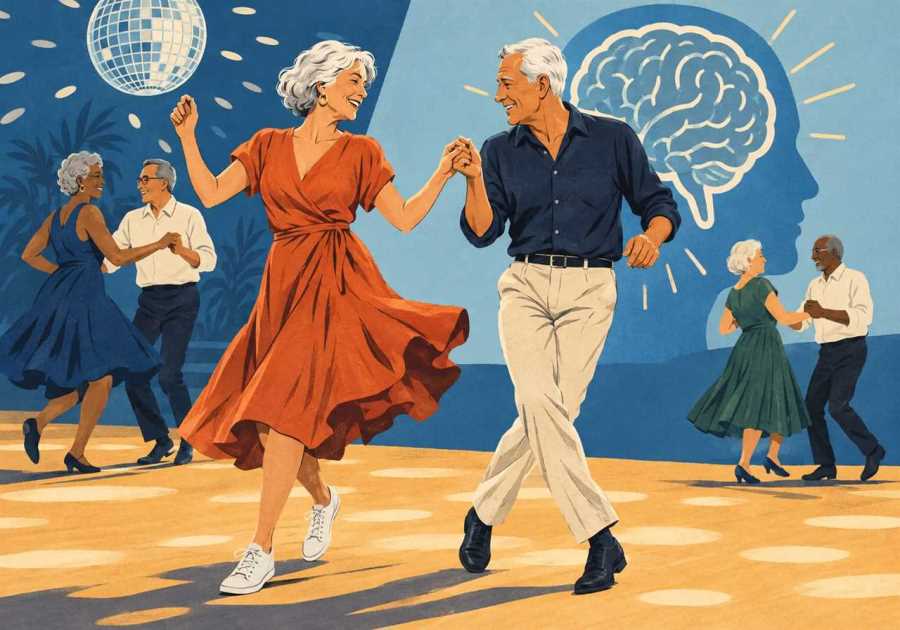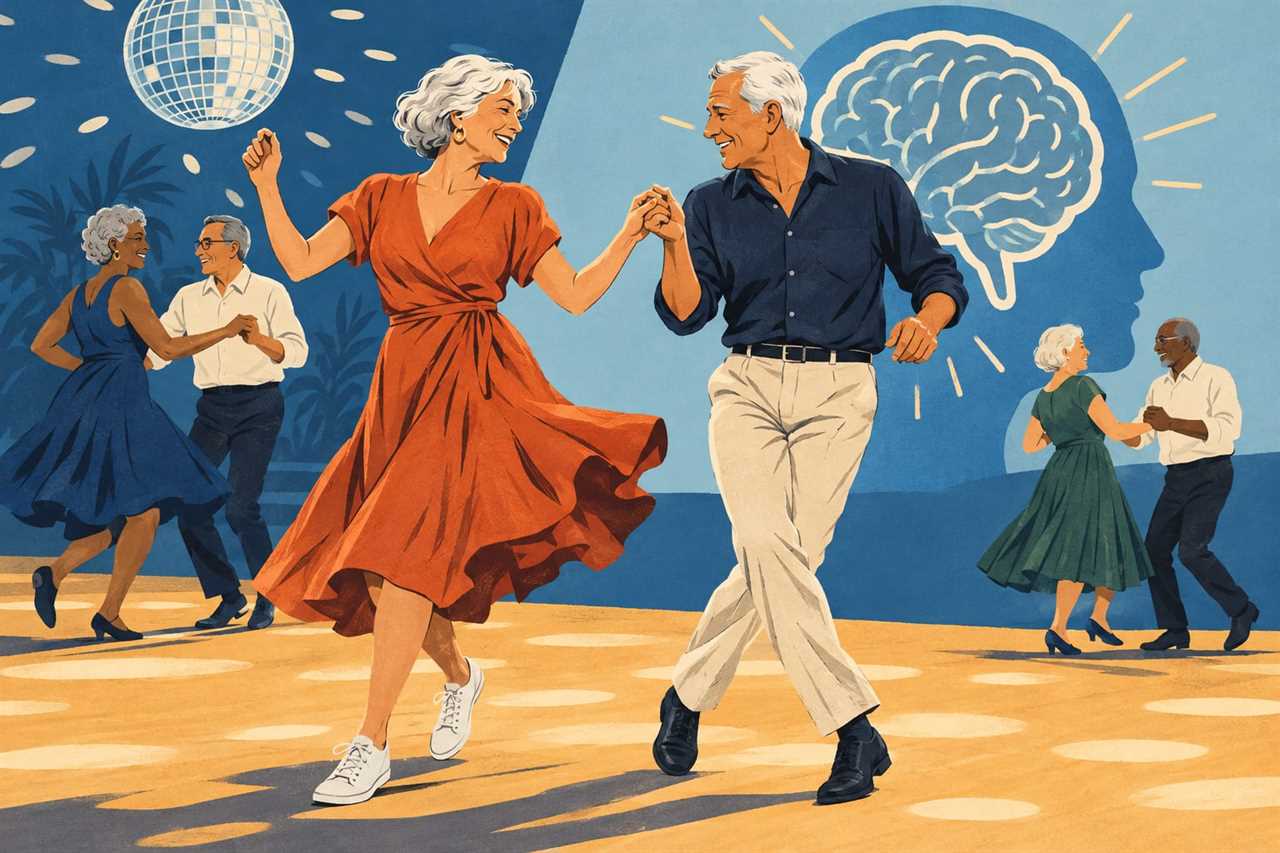
A 95-year-old man is still dancing. And researchers think that single habit might be doing more for his brain than almost anything else he could do.
I came across this story about the 100 Years Strong Project and a man named Mike Zambrano, and I couldn't stop reading. Here's a guy pushing a century of life, still moving to music, still showing up. That's not luck. That's a practice.
The number that stopped me cold: a 76% lower risk of dementia. That's not a typo, and it's not some fringe study nobody's heard of. It comes from research out of Albert Einstein College of Medicine, one of the more respected looks at aging and cognitive decline we have. Researchers tracked older adults and compared different activities — reading, crossword puzzles, playing cards, swimming, cycling, golf. Dancing beat them all. Not by a little. By a lot.
Why would dancing, of all things, do more for your brain than Sudoku?
It's Not Just Exercise, It's a Decision Engine
Here's what I think is going on. When you dance, you're not just moving your body. You're reading your partner. You're responding to music that changes tempo without warning. You're remembering a sequence of steps while adjusting them on the fly. You're using your ears, your eyes, your memory, your balance, and your social instincts all at the same time.
Compare that to riding a stationary bike. Your body works, sure. But your brain can coast. Dancing doesn't let you coast.
That combination — physical movement plus constant mental problem-solving plus human connection — seems to be the magic. Your brain builds new pathways every time it has to improvise. And improvising is exactly what a good dance partner, a live band, or a crowded dance floor forces you to do.
Meet the Man Still Doing It at 95
That brings us back to Mike Zambrano. He's part of the 100 Years Strong Project, a look at people who've kept their minds and bodies going well past the age most of us assume we should slow down. At 95, he's still dancing. Not reminiscing about dancing. Doing it.
I love stories like this because they wreck the narrative we've all been handed — that aging is a slow surrender. Zambrano didn't get the memo. And honestly, neither have a lot of the people I've met in my own travels.
I think about the milongas I've wandered into in Buenos Aires, where couples in their eighties move with more precision and joy than dancers a third their age. Nobody there is thinking about dementia risk. They're just showing up, week after week, because it feels good and because their friends are there. Turns out that habit might be rewiring their brains in real time.
That's the part that gets me. Nobody sets out to prevent dementia by dancing. They do it because it's fun. The health benefit is basically a bonus they didn't ask for.
So What Do You Actually Do With This?
You don't need a dance studio membership or formal lessons, though those help. You need movement that makes your brain work alongside your body. Salsa, swing, line dancing at the community center, even just turning up music in your kitchen and improvising with your spouse — it counts.
The bigger question is one I ask myself constantly: what else am I avoiding just because I think I'm "too old" to start? I didn't start traveling full-time until I was well into my sixties. Turns out the body and brain are far more willing to adapt than we give them credit for — if we actually ask something of them.
Zambrano didn't quit dancing because he hit some arbitrary age. He kept going because it worked for him, and apparently, it's still working.
So here's my question for you: what's your version of the dance floor? What's the thing you could start — or restart — this week that makes your brain scramble a little, that connects you to other people, that you'd actually look forward to doing at 95?
You don't need the perfect plan. You need the first step.
Source: The Healthy
Earlier in this series: The Longevity Secrets Doctors Keep Repeating—And None of Them Cost a Dime