Why do some 70-year-olds bounce back from a hard hike while others struggle to climb a flight of stairs? I've wondered about this a lot, because I'm closing in on 70 myself, and I spend most of my days moving—hiking, paddling, hauling gear, chasing the next place I want to see. Turns out scientists just found a piece of the puzzle hiding inside your cells.
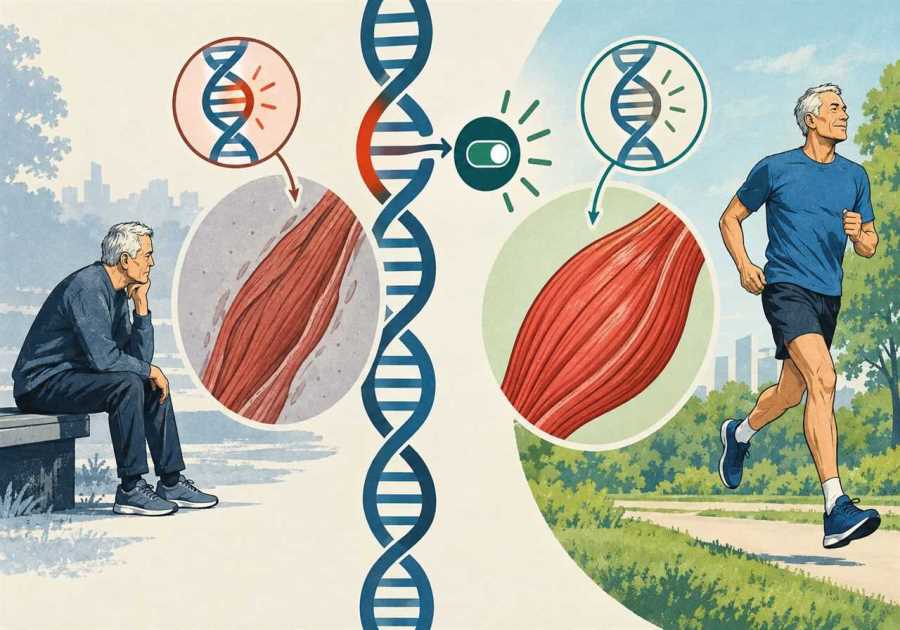
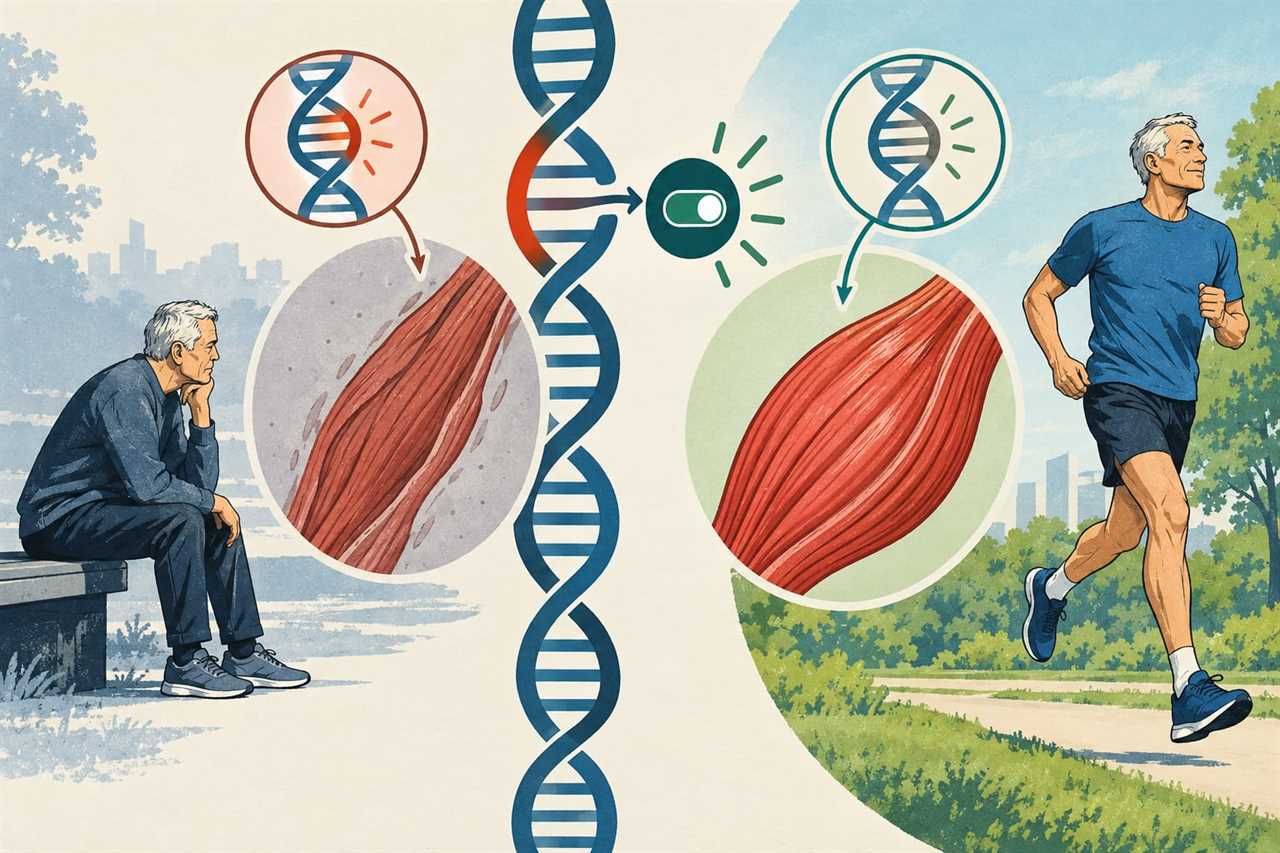
Researchers at Duke-NUS Medical School in Singapore have identified a gene called DEAF1 that seems to control how your muscles age. And here's the part that got my attention: exercise can reverse what this gene does to you.
Let me break down what's actually happening, because it's fascinating.
The Gene That Gums Up the Works
Your muscle cells are constantly doing two jobs at once. They build new proteins, and they clear out old, damaged ones. When that cycle works, your muscles stay strong and repair themselves well. When it breaks down, junk piles up and strength fades.
The researchers found that DEAF1 levels climb as we age. That rise overdrives a pathway called mTORC1, which throws the whole protein-production-and-removal cycle out of balance. Instead of cleaning house, aging muscle cells start hoarding proteins they should've tossed out long ago.
Normally, a family of proteins called FOXOs keeps DEAF1 in check. But FOXO activity also declines with age. So you've got a double hit: the brakes weaken, and the gas pedal gets stuck. That combination, the team says, helps explain why older muscles lose their ability to bounce back after damage.
Exercise Hits the Reset Button
Here's the good news, and it's the kind of thing that makes me want to go lace up my boots right now.
Exercise activates proteins that lower DEAF1 levels. That brings mTORC1 back into balance, letting muscle cells clear out damaged proteins while still building the new ones they need. Assistant Professor Tang Hong-Wen, who led the study, put it simply: physical activity "corrects the imbalance" and helps aging muscles "clear out damaged proteins, rebuild themselves properly, and help them stay stronger and more resilient."
Priscillia Choy Sze Mun, the study's first author, described exercise as telling your muscles to "clean up and reset." She compared lowering DEAF1 to hitting rewind.
I love that image. It matches something I've believed for years without any molecular proof: movement isn't just about building muscle. It's about maintenance. Your body wants a job to do.
There's a Catch
But the researchers found a limit. When DEAF1 gets extremely elevated, or FOXO activity drops too low, exercise alone may not be enough to fully restore the repair system. That might explain why some older adults respond better to exercise than others—it's not about effort, it's about what's happening inside the cells.
That doesn't mean exercise stops mattering as you age. It means the biology underneath it is more complicated than "move more, get stronger." Worth knowing, not worth worrying about.
Fruit Flies, Mice, and a Pattern That Holds
To test all this, the team ran experiments on fruit flies and older mice. When they cranked up DEAF1, muscles weakened fast. When they lowered it, strength came back. Finding the same pattern in two very different species suggests this system has been around, doing this job, for a long time across evolution. That's a strong signal it matters.
Why This Could Matter Beyond the Gym
DEAF1 also affects muscle stem cells—the cells responsible for repairing tissue after injury. As we age, those cells get less effective. So disruptions in DEAF1 may make recovery from surgery, illness, or chronic disease even harder.
That opens a door: could scientists someday adjust DEAF1 directly to help people who can't exercise—recovering from cancer treatment, say, or major surgery—get some of the same cellular benefits that movement normally provides?
Professor Patrick Tan at Duke-NUS called this a potential path toward bringing exercise's benefits to aging populations more broadly. It's early. Nobody's turning this into a pill tomorrow.
What I Take From This
I've never needed a gene to tell me to keep moving. But it's reassuring to learn there's a biological reason why staying active at 68, 70, 80 actually works—why it's not just stubbornness keeping me on trails and in kayaks.
The science is still young. The lesson isn't. Keep moving. Your muscles are listening, all the way down to the genes.
Source: Science Daily
Related reading from us: Aging Better: Understanding Your Risk for Breast Cancer