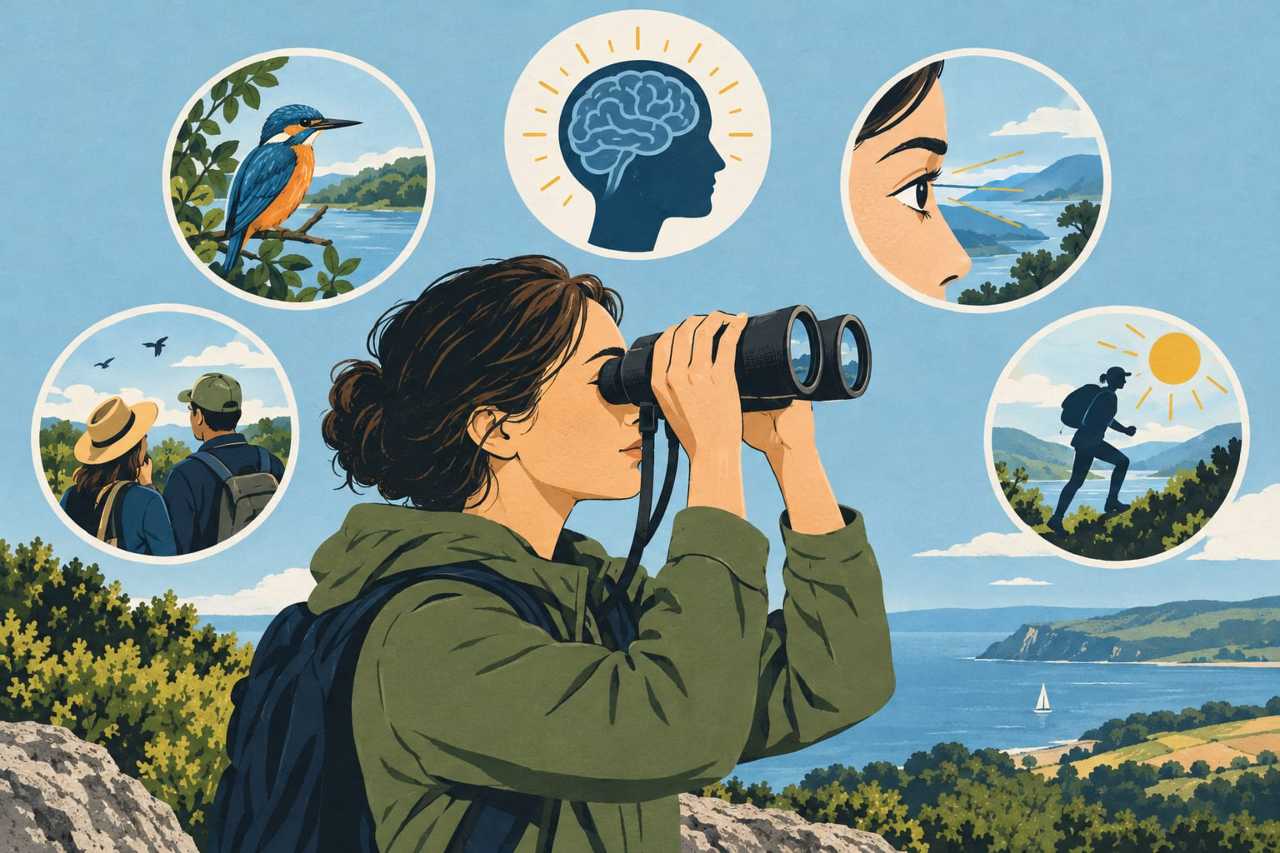
I never thought of birdwatching as exercise. More like something retired folks do with a thermos and a lawn chair, right?
Turns out I had it backwards.
New research says birdwatching might actually slow the aging process and sharpen your brain. Not metaphorically. Actually.
That caught my attention, because I've spent plenty of mornings doing exactly this without realizing I was doing anything useful at all.
Why Watching Birds Does What It Does
Here's what's interesting. It's not the birds themselves that matter so much. It's everything that happens around the watching.
You're outside. You're moving, even if it's just a slow walk along a trail. You're paying close attention, scanning the trees, listening for a call you can't quite place. You're using your memory, trying to recall whether that flash of orange was a tanager or something else entirely. And you're usually doing it quietly, away from screens and notifications.
Researchers have been circling this idea for a while now: that combining light physical activity, sustained attention, time in nature, and a bit of problem-solving creates a kind of cognitive workout. Birdwatching happens to check every one of those boxes without you ever signing up for a class or buying a gym membership.
I've noticed something similar in my own life, just from being outdoors more since I started traveling full time back in 2017. The days I'm out exploring, noticing things, figuring out where a trail leads or what kind of creature just rustled the bushes, those are the days I feel sharpest. Coincidence? Maybe. But the research suggests otherwise.
A Morning in Costa Rica Changed How I Saw This
A few years ago I was in Costa Rica, up before sunrise with a local guide who could identify a bird by its call alone, before it ever came into view. I couldn't tell a motmot from a manakin, but I remember standing there completely absorbed, straining to hear, straining to see, trying to match the sound to something I'd just learned thirty seconds earlier.
That kind of focused attention is rare these days. Most of us are juggling six things at once. But out there, with binoculars up and senses on alert, my brain had exactly one job. Find the bird.
It turns out that single-minded focus, paired with being outside and moving around, is close to a perfect recipe for what researchers are now linking to slower cognitive decline. Who knew a hobby that looks this relaxed could be doing this much work under the hood?
Why This Matters If You're Not Twenty-Five Anymore
I'm closing in on 70, and I've stopped thinking of age as something to manage or outsmart. It's just where I am. But I'm still curious about what keeps a brain working well for longer, because an active mind is what makes the rest of this adventurous life possible.
The appeal of birdwatching is that it doesn't ask much of you physically. No marathon training, no steep mountain trail required. You can do it in your backyard, in a city park, or on a quiet stretch of coastline. That accessibility matters, especially as the research keeps pointing toward activities that blend gentle movement with mental engagement as some of the best tools we have for protecting brain health as we get older.
So what happens if you actually try it? Maybe nothing dramatic right away. But give it a few weeks of slowing down, looking up, and paying attention to something other than your phone, and see how you feel.
Worth Trying for Yourself
I'm not about to call myself a birder. I still can't tell most species apart. But I'm paying more attention now, on every trail, in every new country, to the sounds and movement happening around me instead of walking past it.
Next time you're outside, stop. Look up. Listen for a minute. You might just be doing your brain a favor you didn't know it needed.
Source: NewsNation
See also our earlier piece: Martha's Vineyard Wants to Know: Who's Your Healthy Aging Hero?