Three years. That's what a trip to the museum might be worth.
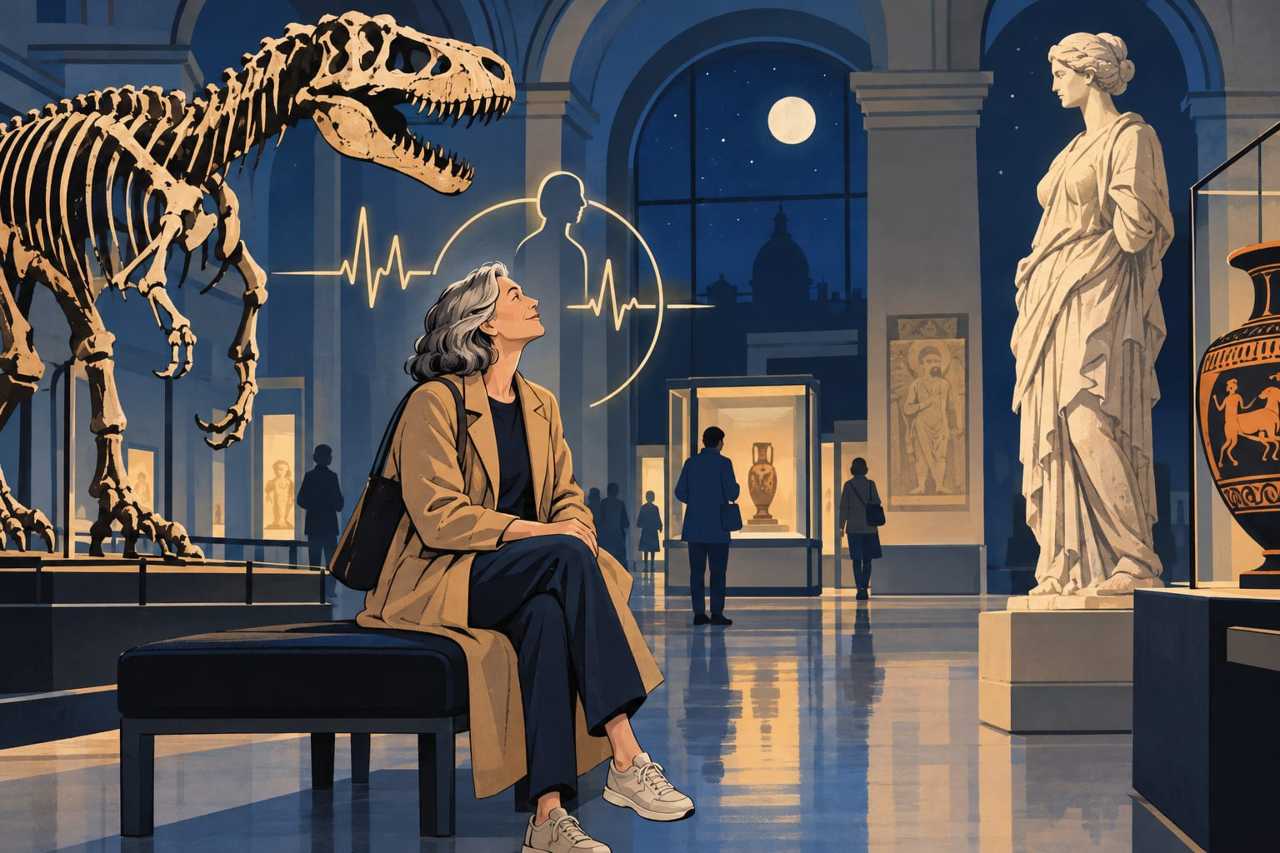
A recent study found that older adults who regularly hit up museums, theaters, concerts and movies had physiological ages about three years younger, on average, than folks who rarely got out. Not calendar age — biological age. The kind that actually measures how your body is doing, not what your driver's license says.
I've always believed that. But it's nice to see the research catching up.
Here's the catch, though: the study doesn't prove cultural outings slow aging directly. It's a correlation, not a cause. But it's one more piece of evidence pointing in a direction a lot of us have suspected for years — staying engaged with the world keeps you younger than staying parked on the couch.
Dr. Bora You, a geriatrician and family medicine physician with Aurora Health Care, put it in a way that stuck with me. "Healthy aging is really about maintaining the ability to function and participate in the community," she says. Not blood pressure numbers. Not cholesterol. Participation.
That's a different way to think about getting older, isn't it? We spend so much energy chasing lab results and forget that showing up — to a concert, a gallery, a theater seat — might matter just as much.
Why Does This Even Work?
Researchers think cultural activities help in a few ways: they build social connections, they support mental health, and they often come bundled with healthier habits in general. People who go to concerts tend to walk more, talk more, sleep better. It's not magic. It's momentum.
Dr. You has seen it firsthand. "When people picture someone in their 90s, they may imagine someone who is very frail," she says. "While that can be the case, I have also met quite a number of people in their 90s who appear and function much younger than some people in their 60s or 70s." Her question for them is always the same: "What's your secret?"
The answer, she says, keeps repeating itself. They stay active.
I've met people like that all over the world. A woman in her 80s I ran into at a museum in Lisbon who'd just come from a flamenco show and was heading to a lecture that afternoon. A retired teacher in his 90s at a jazz club in New Orleans who told me he hadn't missed a Tuesday night set in six years. None of them were chasing youth. They were just living — and it showed.
It's About More Than Filling Time
Dr. You points out that cultural engagement isn't just a distraction from boredom. It gives people chances to learn, interact, and keep routines that feel meaningful. As physical limits creep in and social circles shrink, those routines matter even more.
"When older adults remain socially and culturally connected, they have more opportunities to feel understood, valued and needed," she says.
Understood. Valued. Needed. That's not a small thing at almost 70. I've found that the moment you stop seeking those things out, life gets smaller fast. The moment you keep chasing them — a new city, a new exhibit, a new conversation with a stranger at a café — life stays wide open.
The Real Obstacle Isn't Age
Of course, staying engaged isn't always simple. Transportation issues, health conditions, mobility limitations — they can all get in the way. Dr. You encourages families and communities to help older adults find ways around those barriers, whether that's helping someone keep up a hobby they've always loved or connecting them with senior centers and community programs built for exactly this purpose.
Her bigger point: one of the most important things a geriatrician can do is help people think ahead about how to stay independent, safely, for as long as possible.
That's the whole philosophy, isn't it? Independence isn't something you protect by sitting still. You protect it by moving, by staying curious, by showing up somewhere new.
So here's a question worth asking yourself this week: when's the last time you went somewhere just to see something, hear something, or learn something new?
Maybe it's time to buy that ticket.
Source: health enews
Our last article on this: The Ranch Woman Who Dug Post Holes at 70 and Taught a Doctor Everything