A man in his 80s lost 50 pounds in six months on a GLP-1 medication. His diabetes improved. His golf game didn't. He went from walking the course to needing a walker.
That story stopped me. Because it's not really about weight loss. It's about what happens when we chase a number without paying attention to what it costs us.
I ran across this through UNC Health geriatrician John Batsis, who's been studying how these drugs — semaglutide (Ozempic, Wegovy) and tirzepatide (Mounjaro, Zepbound) — actually play out in people over 65. And his answer is refreshingly honest: we don't fully know yet.
The Research Problem
Here's something worth sitting with. When GLP-1s went through development, most of the people tested were younger than 65. That means there are no guidelines built specifically for older adults.
"Ask different experts, you might get different opinions," Batsis says.
I like that he's willing to say that out loud instead of pretending there's a tidy answer. Because there isn't. Not yet.
The benefits — weight loss, better blood sugar control — don't change with age. The risks do.
Why Your Body Handles This Differently
GLP-1s are known for nausea, constipation, and appetite loss. Annoying at any age. Potentially dangerous after 65.
Why? Because you're already more prone to dehydration and constipation as you get older. Stack a medication's side effects on top of that, and suddenly you've got a real problem if you're not pushing fluids and watching your bowel movements closely.
Then there's the muscle and bone loss question. Aging already chips away at both, especially if you're not staying active. Add rapid weight loss from medication, and you're looking at a faster path to osteoporosis, frailty, falls, even permanent disability.
That's the trade-off nobody puts in the commercials.
So What Should You Actually Do?
Batsis doesn't say skip it. He says go in smart.
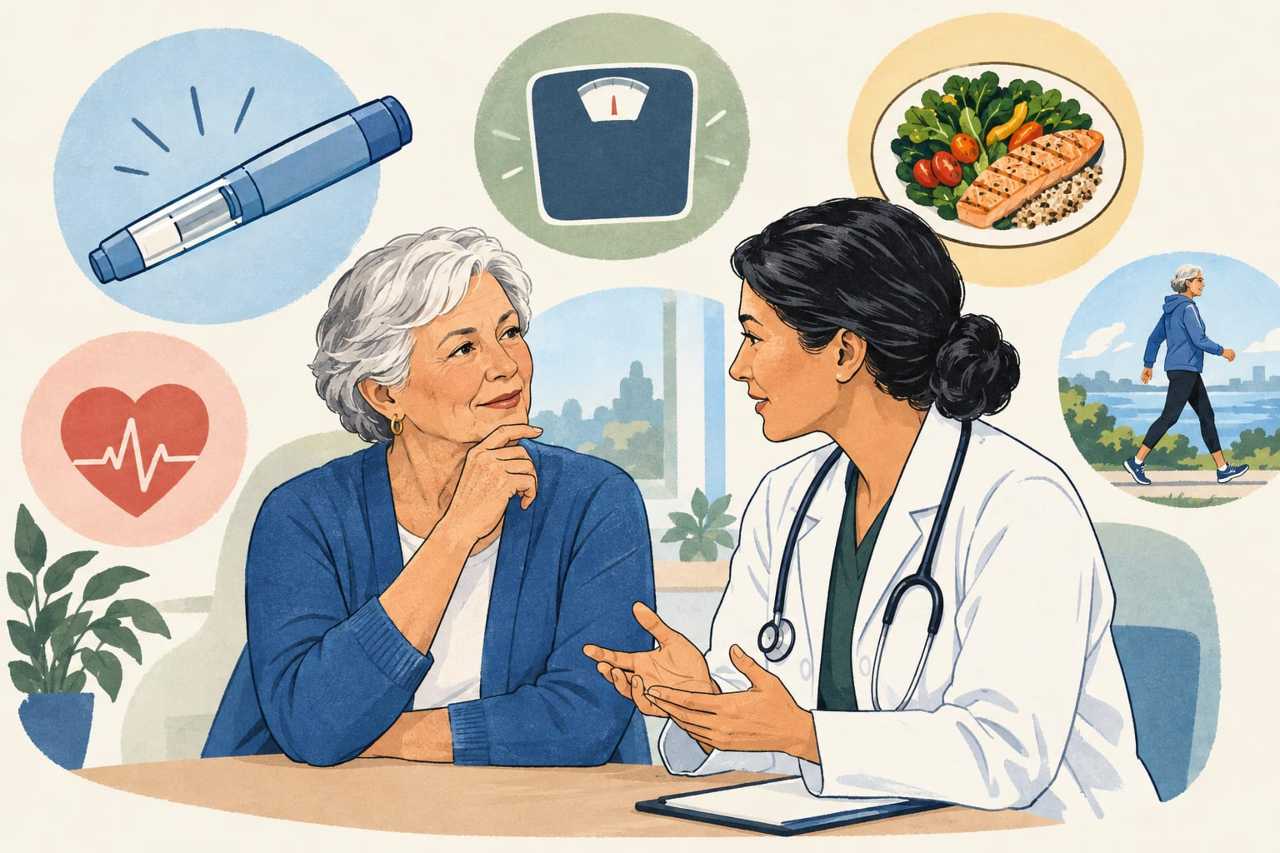
Build the foundation first. Protein, fiber, hydration, strength training — before and during. "Ideally, starting on a GLP-1 is a team-based effort," he says, meaning your doctor, a dietitian, and someone helping you move, whether that's a trainer or physical therapist.
And if you're nowhere near the recommended 150 minutes of cardio and 60 minutes of strength work a week? Start smaller. "Something is always better than nothing," Batsis says. "It's OK to start with 10 minutes of movement a day."
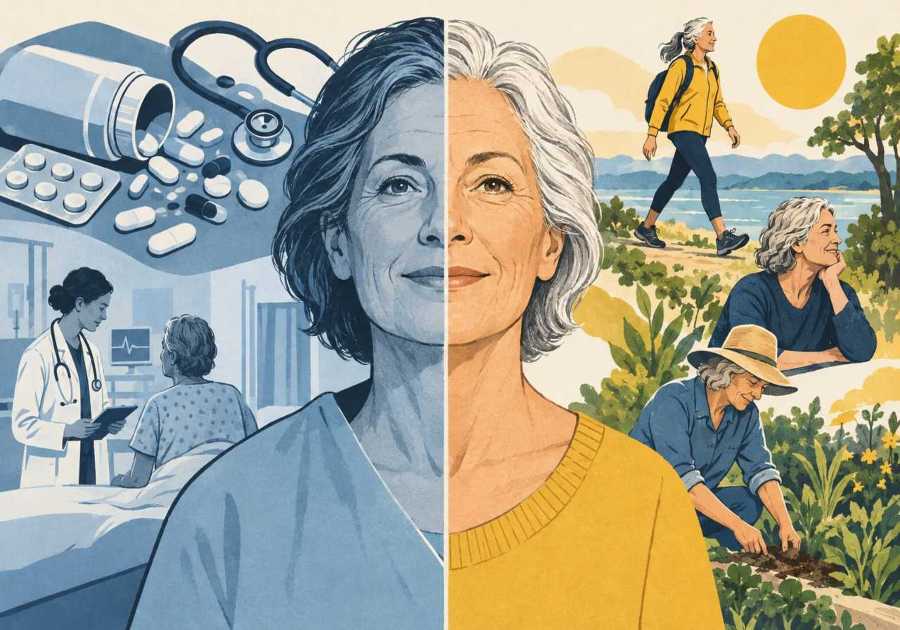
Chase function, not a scale number. This is the part I find most interesting. Instead of asking "how much weight can I lose," ask "what do I want to do that I can't do right now?" Get on the floor with grandkids. Walk the block without stopping. Those are real goals. A dropping number on a scale isn't.
Losing 10 to 15 percent of body weight gradually has been shown to improve blood pressure and blood sugar while protecting muscle. Gradually being the key word.
Go low, go slow. These medications come in five or six dosing levels, and it can take months to work up. Over 65, you may need to go even slower — and you may never need the top dose. "Rapid weight loss is not good for anyone because of the risk of muscle loss," Batsis says. And please, skip the compounded versions ordered online. He's blunt about it: stay under clinical supervision.
Pay attention to what your body's telling you. That man who lost 50 pounds and ended up with a walker? Once his doctor adjusted his dosing, his function came back. The lesson isn't that GLP-1s are bad. It's that one-size-fits-all doesn't work here. "Communication is so important," Batsis says. "It really needs to be individualized so that it's right for you."
Here's the Thing
I'm closing in on 70 myself, and the older I get, the more I care about what my body can do, not what the mirror says. Mobility is the real currency of an adventurous life. You can't chase a sunset in Patagonia or hike a ridge in Portugal if you've traded muscle for a smaller waistline.
If you're considering a GLP-1, that's a conversation worth having — slowly, with your doctor, with your eyes on function, not just the scale.
Source: WRAL
See also our earlier piece: Stroke Rates Among Americans Under 55 Have Nearly Doubled. Here's Why That Should Wake You Up.