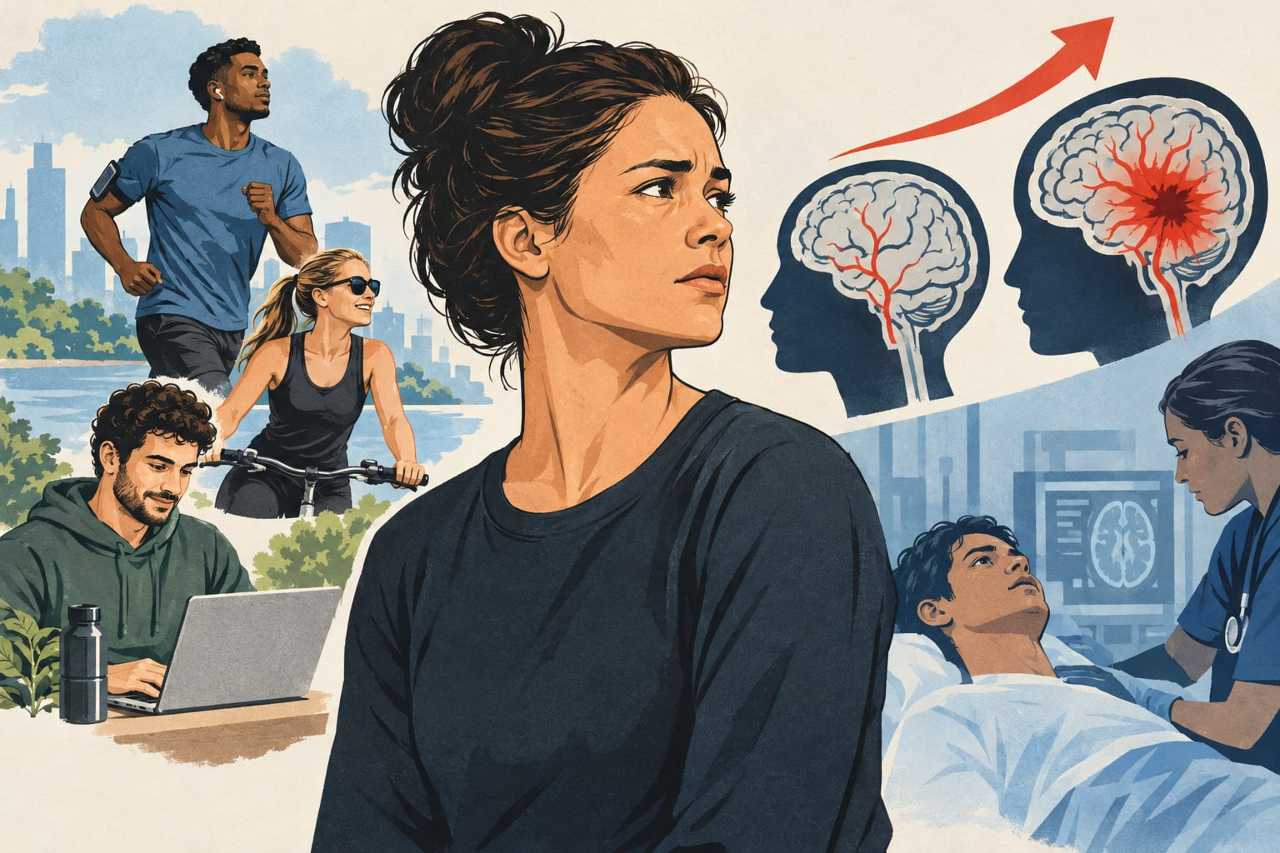
Stroke used to be an old person's problem. Not anymore.
New numbers show stroke rates among Americans under 55 have nearly doubled. Read that again. We're not talking about people in their 80s. We're talking about people in their 30s and 40s, people who thought they had decades before they needed to worry about this stuff.
So what changed? And more importantly, what do you do about it?
This Isn't Just a Headline, It's a Warning
I've spent the last several years traveling full-time, meeting people from all walks of life, all ages. One thing I notice everywhere I go: younger people sitting more, moving less, stressed more, sleeping worse. Add it up and you get a body that's aging faster than the calendar says it should.
Doctors have been pointing to the usual suspects for years. High blood pressure. Obesity. Diabetes. Smoking. Heavy drinking. None of that is new. What's new is how early these conditions are showing up in people's lives.
Think about it. If you're 35 and already dealing with high blood pressure or prediabetes, your body's been under strain for a while. Stroke doesn't happen out of nowhere. It's usually the end result of years of wear and tear nobody paid attention to.
Why Younger Bodies Are Breaking Down Sooner
Here's a question worth asking: why would stroke rates climb specifically in the under-55 crowd, while older generations have had more time to develop these same risk factors?
Part of the answer is lifestyle. Desk jobs. Fast food. Constant screen time. Chronic stress that never really shuts off. Sleep that gets sacrificed for work, or scrolling, or just trying to keep up.
Part of it might be awareness, too. Doctors are getting better at catching strokes in younger patients instead of writing off symptoms as migraines or anxiety. That's a good thing, even if the numbers look alarming at first glance.
Either way, the takeaway is the same. Whatever age you are right now, your habits today are setting up your health ten, twenty, thirty years down the road. I'm almost 70, and I can tell you, the choices I made in my 30s and 40s are still showing up in my body now. Some good, some I wish I'd rethought sooner.
What You Can Actually Do About It
I'm not a doctor, and I'm not going to pretend I have a magic formula. But I've learned a few things from staying active and curious about my own health as I've gotten older.
Move. Every single day. Not a gym membership you feel guilty about, just movement. Walking, hiking, swimming, whatever gets your heart working and your blood flowing.
Know your numbers. Blood pressure, blood sugar, cholesterol. If you're under 55 and haven't had these checked recently, why not? It takes twenty minutes and could change the trajectory of your life.
Pay attention to stress. Chronic stress isn't just a feeling, it's a physical load on your heart and blood vessels. Find what helps you decompress and actually do it, not just think about doing it.
Sleep matters more than you think. I used to treat sleep like an inconvenience. Now I treat it like fuel.
Why This Matters to You, Right Now
Here's the thing about adventure, freedom, and living life on your own terms: none of it happens if your body gives out early. I didn't start traveling full-time until I was in my sixties, and I plan on doing this for a long time yet. That only works if I take care of the machine I'm running on.
Age isn't the enemy here. Neglect is.
If you're under 55 and reading this, don't panic, but don't ignore it either. Get curious about your own health the same way you'd get curious about a new place to explore. Ask questions. Experiment with better habits. See what happens.
Your future self, the one still out there chasing adventures decades from now, is counting on the choices you make today.
Source: Men's Journal
Still catching up? Start with Your 50s Aren't a Countdown — They're a Checkpoint