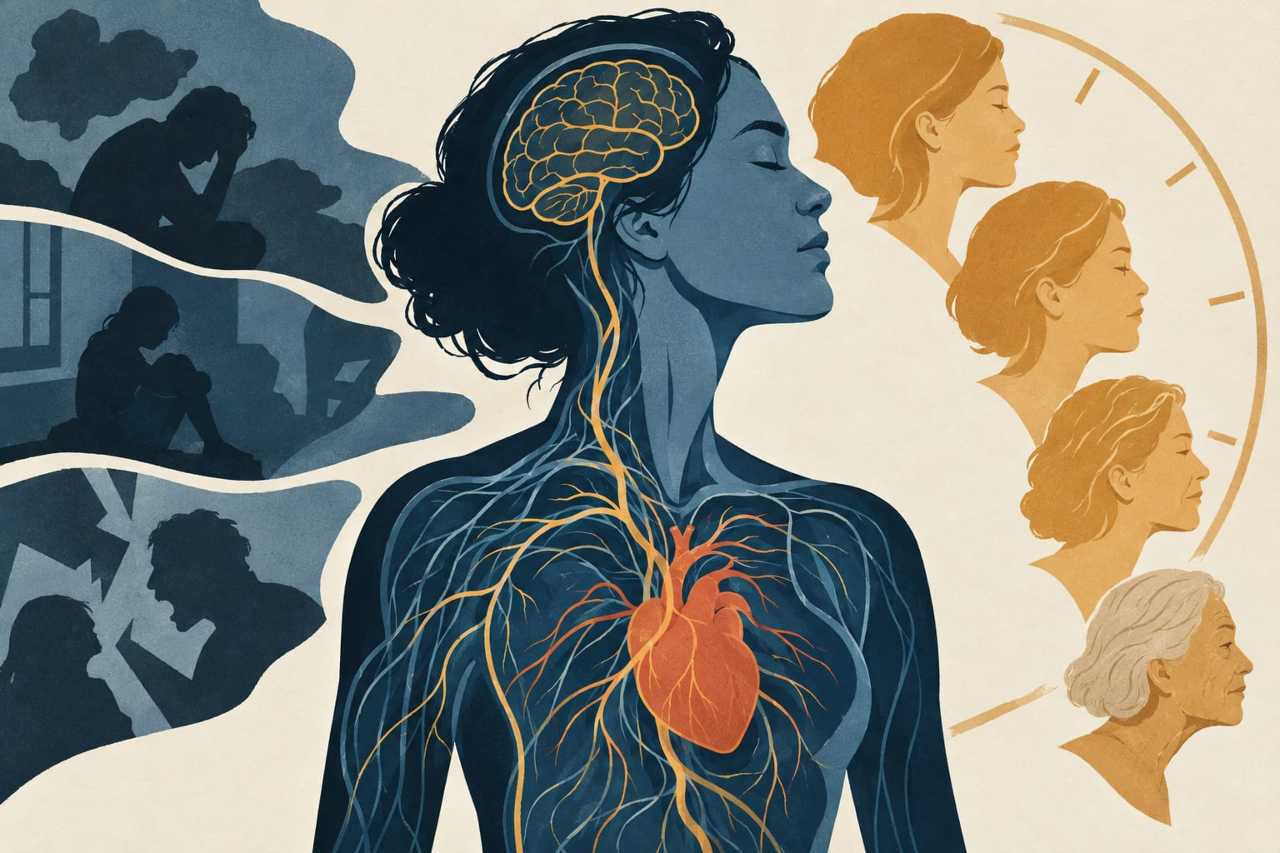
I've always figured stress ages you faster. Turns out there's a number for that now. A big one.
Researchers just published a study in Clinical Epigenetics that looked at health data from 25,775 adults across the US. They wanted to answer a simple question: does chronic stress actually show up in your biological age, not just how tired you feel? The answer is yes, and the gap is bigger than I expected.
What they actually measured
The researchers used something called allostatic load. Think of it as a scorecard for wear and tear on your body from prolonged stress. It's built from eight markers: blood pressure (both numbers), resting pulse, BMI, blood sugar (A1C), cholesterol, HDL, and albumin. Score high risk on four or more of those eight, and you land in the "high allostatic load" group.
In this study, about 1 in 5 adults — 21.56%, to be exact — fell into that high-stress-load category.
Here's where it gets interesting. Instead of using one aging test, the team used four different ones: Phenotypic Age (built from blood biomarkers), Biological Age (based on DNA methylation — your actual epigenetic clock), GOLD BioAge, and Light BioAge. Four different lenses, same question: is this body aging faster than the calendar says it should?
The numbers that stopped me
People with high allostatic load showed a 2.08-year jump in Phenotypic Age. That's noticeable, but not shocking.
The epigenetic number is what got me. A 9.06-year increase in Biological Age. Nine years. That's not a rounding error, that's a different decade.
On top of that, high stress load meant 1.6 times higher odds of accelerated GOLD BioAge and 2.16 times higher odds of accelerated Light BioAge. Four separate tools, all pointing the same direction.
Diet plays a part, but it's not the whole story
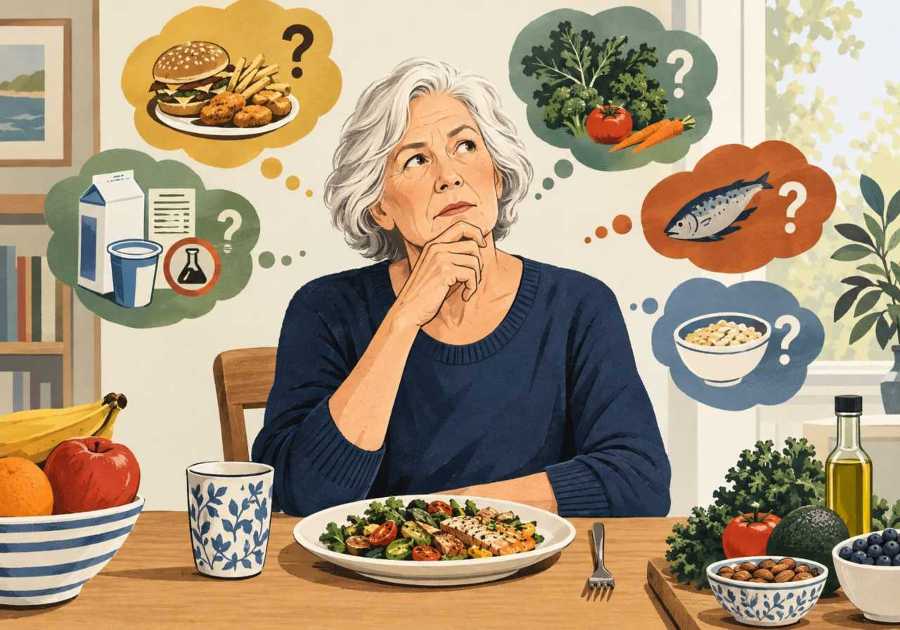
The researchers also looked at the Dietary Inflammatory Index — basically, how much your food choices stoke inflammation versus calm it down. People with high allostatic load ate more pro-inflammatory diets on average (1.22 versus 0.87 on the index). Each point increase in that inflammatory score was tied to another 0.71 years added to Phenotypic Age and 0.26 years to Biological Age.
But here's the honest part: diet only explained a small slice of the stress-aging connection. As little as 0.33% of the link for Biological Age, up to about 5.45% for Phenotypic Age. So eating better matters, but it's not going to undo the damage from chronic stress on its own. Something else is doing most of the work — maybe oxidative stress, gut health, or telomere biology, which the researchers flagged as likely contributors they couldn't fully measure.
Who felt it most
Younger adults, ages 20 to 39, showed the strongest aging acceleration on two of the four measures. That surprised me. I'd have guessed middle-aged or older adults would take the bigger hit. Women showed more vulnerability than men on the Light BioAge measure. And people with a healthy BMI under 25 showed the biggest jump in epigenetic Biological Age, which tells me you can't just point to weight and call it a day. Stress does its own damage, independent of the usual suspects.
So what do you do with this?
This was a cross-sectional study, so it can't prove stress causes faster aging in a strict before-and-after sense. But the pattern across four independent aging clocks, in over 25,000 people, is hard to wave off.
I've spent years building a life around reducing the chronic stress that comes from obligations I didn't choose. Traveling full-time since 2017 taught me that a lot of what ages us isn't the big crisis, it's the slow grind of things we tolerate every day. Commutes, conflict, financial pressure, feeling stuck.
You can't eliminate stress. But you can ask what's driving yours, and whether it's something you're choosing to keep. That's a question worth more than any supplement.
What's actually adding years to your body right now? Worth finding out before the next checkup does it for you.
Source: Bioengineer.org
Before this, we covered: Why Mark and Debbie Haworth Treat Their Doctor Like a Travel Planner